
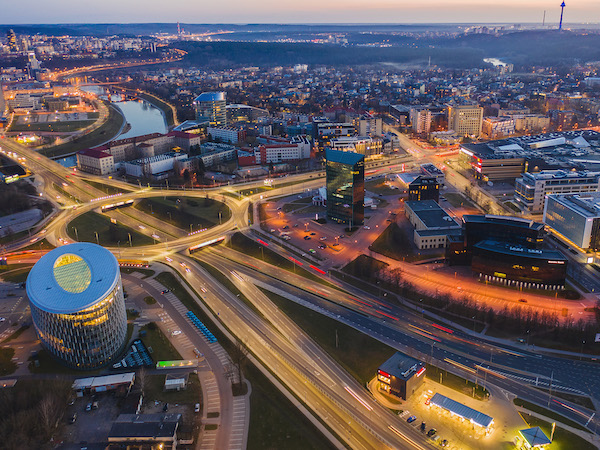



In 2025, the Lithuanian investment deal market was driven by domestic capital


As predicted, investors in income-generating commercial properties were noticeably more active in 2025 than in 2024. And although very few large-scale transactions were concluded during the year, local investors purchased smaller properties in large numbers across the country, bringing the total volume of investment transactions back to 2020 levels, according to an Ober-Haus report.
According to Ober-Haus data, in 2025, modern commercial real estate (offices, retail, warehouse, and industrial buildings and premises valued at no less than €1.5 million) worth €344 million, or 50% more than in 2024. The 2025 result is essentially in line with the annual average of the past ten years (€357 million).
“In total, over 40 properties were acquired in Lithuania during the year, which is a truly substantial number, even when compared to the most active years. Therefore, it is not surprising that 2025 saw one of the historically lowest average transaction sizes, which did not reach €8 million. Only four of the acquired properties exceeded €20 million in price, and they accounted for one-third of all investments in Lithuania. “This accurately describes the current situation, where the investment transaction market is essentially having to manage without large-scale international capital,” says Raimondas Reginis, Head of Market Research for the Baltic States at Ober-Haus.
Investors showed particular interest in both small grocery stores and larger shopping centers
According to Ober-Haus calculations, in 2025, the largest share of investments went to retail properties, with €162 million spent on their acquisition—accounting for 47% of all investments in commercial real estate in Lithuania. “For two years in a row, this segment has dominated both in terms of total investment volume and the most expensive properties acquired,” notes R. Reginis.
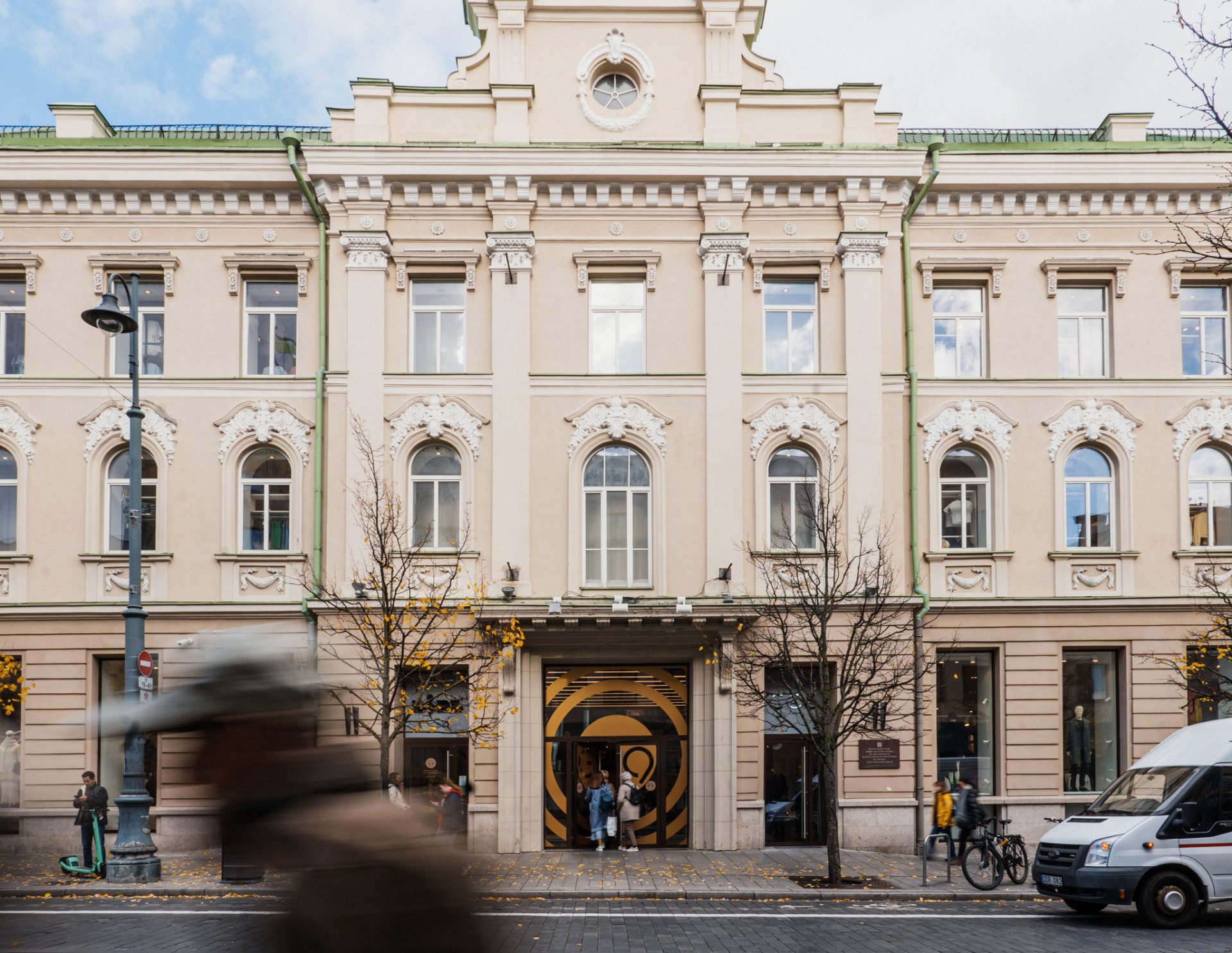
The largest properties acquired were in Vilnius and Kaunas. The investment company NDX Group acquired the Savas shopping center, with an area of more than 13,000 square meters, in Kaunas; Corum, a real estate investment fund management company registered in France, sold the Depo store in Vilnius to the same Latvian retail chain; and at the end of 2025, it was announced that Rivona was purchasing the G9 shopping center on Gedimino Avenue in the capital from a fund managed by Lords LB Asset Management (this transaction was completed in early 2026, following approval of the concentration by the Lithuanian Competition Council).
“In addition to these larger transactions in the retail space segment, buyers were also active in acquiring modern small-format stores (1,500–3,000 sq. m) housing major grocery chains. Buyers also acquired larger retail properties housing multiple tenants and showed interest in mid-sized properties exclusively for their own use,” explains R. Reginis.
Investments in warehouse and industrial properties were more substantial than in the office segment
Somewhat unexpectedly, the second-largest share of investments in 2025 went toward the acquisition of warehouse and industrial properties. “Typically, the least amount of money is spent in this real estate segment, but the significant number of various properties acquired, combined with extremely modest investments in the office segment, propelled the warehouse and industrial segment to a solid second place in 2025,” notes R. Reginis. According to Ober-Haus data, a total of €111 million was spent in this segment over the year, accounting for 32% of all investments in commercial real estate in Lithuania. Investors were interested in a wide variety of properties in the Vilnius, Kaunas, and Klaipėda regions—large logistics centers, smaller warehouses, or industrial properties.
A fund managed by the investment company Prosperus invested in as many as four different warehousing and industrial properties in 2025: the VMG Technics R&D Park building in the VMG Group’s industrial innovation park in the Klaipėda district, warehouses covering more than 28,000 sq. m on Terminalo St. in the Kaunas district, the “KG Construction” factory in the Vilnius district, and the “Alwark” warehouse with offices).
Meanwhile, the office segment’s share in 2025 fell to its lowest level since 2012, accounting for just 21% of all investments in commercial real estate in Lithuania. The largest transactions in this segment took place in Vilnius: a company owned by the Lithuanian investment firm Groa Capital acquired two office buildings—Meraki and Assgard Keys. Additionally, in the second half of 2025, two small office buildings were completed in Vilnius: one in the city center (on A. Domaševičiaus Street) and an office building in Pilaitė constructed in 2024.
Office buildings in the capital are typically one of the most attractive investment targets, as the largest number of such properties is concentrated here. According to R. Reginis, however, the rising vacancy rate is eroding investor confidence in this segment, so buyer activity is currently quite low. There is often a desire to sell newly developed office buildings, but this is hindered by excessively high vacancy rates (by the end of 2025, the overall vacancy rate for office space in the capital reached 10.8%). For example, the decision to sell the “Assgard Keys” office building was made as early as 2023, but this was not possible because the majority of the space in this building was unoccupied. The building was only sold after a tenant (the national development bank ILTE) was found for the vacant space in 2025.
The share of foreign investors is at a record low, while the capital region’s share has declined
According to Ober-Haus data, in 2025 the share of Lithuanian-controlled capital in investment transactions jumped to as high as 86%, the highest figure in history (in 2022–2024, the share was also exceptionally high, ranging from 73% to 82%).
“Essentially, all foreign investors currently acquiring commercial real estate are already connected to Lithuania in one way or another, such as the Latvian retail chain ‘Depo,’ which acquired a store. Meanwhile, there are virtually no new foreign companies or funds left that would be acquiring real estate in Lithuania for the first time,” notes R. Reginis.
Typically, the Vilnius region attracts the most investment, as it has the highest concentration of various modern commercial real estate properties that interest potential investors. However, with the decline in investment in the office segment, after an exceptionally long hiatus, the share of investment allocated to Vilnius and its surroundings was slightly less than 50% (in 2015–2024, the share was 67%). “It can be said that in 2025, the distribution of investments was noticeably more even and was not concentrated solely in the capital. A significant amount of real estate was purchased in cities or their surrounding areas such as Kaunas, Klaipėda, Šiauliai, Panevėžys, Plungė, Alytus, Jurbarkas, Molėtai, and elsewhere,” says a representative of Ober-Haus.
A strong start to 2026 points to an active year
Looking at the transactions concluded in 2025–2026 and their purchase prices, the overall trends remain very similar to those of the past few years. “First and foremost, buyers are interested in properties in good condition, located in strategically attractive areas, and fully leased. Meanwhile, selling a slightly older and not fully leased property can be quite challenging, even after reducing its price. Potential buyers currently see significant costs and risks associated with additional investments in property renovation and tenant acquisition,” says R. Reginis.
The expert notes that grocery stores continue to attract the most interest among investors, with buyers paying record-high prices for them (there are properties being acquired even at a rate of return below 6.0%). Such stores, which generate a stable stream of rental income, can be acquired by a wide range of investors, as the total sale price is not particularly high (typically ranging from 3 to 6 million euros). Meanwhile, office buildings, industrial properties, or larger shopping centers, depending on their condition and location, are typically acquired with a 7.0–9.0% rate of return.
“Given that the country’s business community has recently been particularly cautious in assessing its expansion opportunities and the demand for commercial space for rent, the commercial real estate investment market posted truly solid results in 2025. New projects implemented each year are consistently expanding the portfolio of modern, income-generating properties in the country and providing more abundant and diverse investment opportunities for potential investors. “And the results from the start of 2026 suggest that the investment transaction market will remain active this year—especially in the retail and industrial real estate segments,” predicts R. Reginis.
Latest news
 All news

Buyers are paying €20,000 more for standard apartments than a year ago
The Ober-Haus Lithuanian Apartment Price Index (OHBI), which tracks apartment price changes in Lithuania’s five largest cities (Vilnius, Kaunas, Klaipėda, Šiauliai and Panevėžys), increased by 1.2% in September 2026. Over the past 12 months, apartment prices across these cities have risen by 13.7%, unchanged from the annual growth rate recorded in August 2026. In September 2026, apartment prices increased by 0.9% in Vilnius, 1.7% in Kaunas, 1.1% in Klaipėda, 2.0% in Šiauliai and 2.8% in Panevėžys. The average price per square metre reached €3,197 in Vilnius (+€27/m²), €2,339 in Kaunas (+€39/m²), €2,103 in Klaipėda (+€23/m²), €1,457 in Šiauliai (+€28/m²) and €1,432 in Panevėžys (+€39/m²). Year-on-year, apartment prices rose in all five cities. Compared to September 2025, prices increased by 12.2% in Vilnius, 16.8% in Kaunas, 12.9% in Klaipėda, 17.3% in Šiauliai and 17.5% in Panevėžys. “Even the recent acceleration in housing price growth has not slowed activity in the real estate market. According to data from the State Enterprise Centre of Registers, the number of apartments purchased nationwide in the third quarter of this year was 2.1% higher than in the same period last year, while house purchases increased by 13.3%. Meanwhile, apartment prices in Lithuania’s major cities are rising…

A new 40-apartment development, “Matau marias”, is being built on the shores of the Ekranas Lagoon in Panevėžys
A new real estate development, “Matau marias”, is being built in Panevėžys by the Ekranas Lagoon. At Elektronikos g. 10, four low-rise buildings are planned, comprising 40 leisure-use apartments with partial interior finishing. The apartments will range in size from 28 to 96 sq. m. Construction began in August 2026 and is scheduled for completion by the end of 2027. One of the development’s key features is its location directly beside the Ekranas Lagoon. The buildings are surrounded by greenery, while the site is closely integrated with the lagoon’s shoreline. The development will include pedestrian paths, landscaped green and recreational areas, an upgraded waterfront, and a private jetty for apartment owners. “Living by the water is usually associated with the countryside or resort towns, so a location like this in Panevėžys itself is quite rare. Here, the water and nature are not simply part of the view – the lagoon’s shoreline becomes a natural extension of the development. At the same time, the city centre remains just a few minutes away,” says Justina Ščeponavičė, Head of Sales for the project. Four low-rise buildings and just 40 apartments “Matau marias” consists of four low-rise buildings connected by a cohesive landscape concept…
Optimism continues to support housing price growth
The August 2026 value of the Ober-Haus Lithuanian Apartment Price Index (OHBI), which tracks apartment price changes in the five largest cities in Lithuania (Vilnius, Kaunas, Klaipėda, Šiauliai and Panevėžys), increased by 1.8%. Over the past 12 months, the overall apartment price level in Lithuania’s major cities rose by 13.7% (in July 2026, annual growth stood at 12.9%). In August 2026, apartment sale prices in Vilnius, Kaunas, Klaipėda, Šiauliai and Panevėžys increased by 1.6%, 2.1%, 2.3%, 1.0% and 1.3%, respectively. The average price per square metre reached €3,170 (+€50/m²), €2,300 (+€47/m²), €2,080 (+€48/m²), €1,429 (+€14/m²) and €1,393 (+€18/m²), respectively. Over the year (August 2026 compared with August 2025), apartment prices increased in all major cities across Lithuania: by 12.7% in Vilnius, 16.4% in Kaunas, 12.9% in Klaipėda, 15.8% in Šiauliai and 14.6% in Panevėžys. “Despite considerable expectations regarding the impact of the second-pillar pension reform and changes to the Responsible Lending Regulations on the Lithuanian housing market, we have not observed a significant surge in market activity recently. According to data from the State Enterprise Centre of Registers, 2.5% more apartments and houses were purchased in Lithuania this August than in the same month last year, but 4.7% fewer than…
All news