



The housing market in the country’s main cities shows signs of stabilisation, but the situation in the coastal region does not look sustainable


 This year, with the main indicators of the Lithuanian housing market reaching new highs, market players have seen an extremely intense and exciting period. The substantial amounts poured into the housing market by purchasers, notably active purchase of land plots for the development of new projects and speedily growing residential property prices are reminiscent of the mood which prevailed in the real estate market over a decade ago. However, following the great leap in terms of activity in the housing market seen in the middle of 2021, the third quarter looked slightly calmer and it is expected that this might serve as a sign that the market is transiting to a period of more sustainable development.
According to the data of the Centre of Registers, Q3 2021 saw 11% fewer apartment purchases and 2% more house purchase-sale transactions registered in Lithuania compared to Q2 2021. The decline of transactions was similar for the same period in the main cities of Lithuania both in the apartment segment apartment (22% – in Vilnius, 15% – in Kaunas, 9% – in Klaipėda, 11% – in Šiauliai, and 10% – in Panevėžys), and houses (9% – in Kaunas, 10% – in Klaipėda, 19% – in Šiauliai, and 28% – in Panevėžys). Only Vilnius‘s house segment demonstrated a 5% growth in transactions over this period. Compared to the total number of housing transactions concluded over nine months in 2020, this year 27% more apartments and 33% more houses were purchased in Lithuania.
The year 2020, was certainly not noted for an abundance of transactions due to the pandemic, which explains why there has been such a fast relative growth in the number of transactions this year. However, if compare the activity of Lithuania‘s housing market in 2021 with the pre-pandemic period, this year growth in the housing market has been particularly fast and has reached new heights. Comparing year 2021 with the same period in 2019 shows that this year the purchase of apartments was 11% higher, and 36% more houses were sold.
Slower growth in the prices of apartments is expected
According to Ober-Haus data, the pace of growth of apartment sale prices in the biggest cities of the country in 2021 has evidently increased and significantly exceeded the previous price growth forecasts. Whereas apartment sale prices in the main cities increased by 1.9% on average over Q4 2020, the growth in Q1 2021 amounted to 4.3%, in Q2 – to 6.2%, and in Q3 – to 5.7%. Over Q3 2021, apartment sale prices in Vilnius, Kaunas, Klaipėda, Šiauliai and Panevėžys grew by 6.2%, 6.6%, 4.2%, 3.6% and 3.6%, respectively.
This scale of growth in the sales prices of apartments was last seen more than a decade ago; however, in September 2021, the average sale price in Vilnius reached an all-time high. Meanwhile, the other main cities of Lithuania see apartment prices ranging from 6% to 25% lower than in the late 2007–early 2008.
Given the fact that after reaching its peak in Q2 2021 the activity in the apartment segment stabilised in Q3 2021 and that following a steep increase of prices in the market a considerably higher price level has been set, it is likely that in Q4 2021 and Q1 2022 more modest growth in apartment sale prices will be recorded. It should also be noted that expectations of residents have been lowering in recent months. Referring to the data provided by the Department of Statistics, the consumer confidence index reduced by 7 percentage points in the last three months of this year: from 4 in July to minus 3 in October. In October 2021, residents also demonstrated a more pessimistic view with regard to the financial and economic prospects in households.
Apartment rental market of the capital city successfully assimilating the new supply
The apartment rental market in the main cities of the country in 2021 looked as strong as the sales market. According to the data available on the housing rental sector, the current pandemic had no negative impact on the long-term apartment rental segment and the activity of the market this year has been even higher than before the pandemic. For instance, the total number of long-term housing rental transactions concluded by Ober-Haus in Vilnius, Kaunas and Klaipėda over the nine months of 2021, compared with the same period in 2019 and 2020, has increased by 14% and 9% accordingly. And the upsurge in activity of the housing rental market continued to reduce the number of objects available for rent. At the end of Q3 2021, the number of apartments offered for rent in the real estate listing portal Aruodas in Vilnius, Kaunas and Klaipėda was 25–30% lower than a year ago. This decrease in supply of apartments offered for long-term rent should be assessed with consideration to a few other factors which demonstrate the potential of the Vilnius housing rental market – the biggest in the country.
First, the short-term rental market in Vilnius halved during the pandemic (based on the data of AirDNA), which means that a significant share of housing designated for short-term rent replenished the long-term apartment rental supply. The housing developers who regularly supply the market of the capital city with new projects offering various sizes of housing should not be forgotten either. In 2021 alone, the rental market will offer about 350 units for rent and by the end of 2021 Vilnius will have slightly more than 700 mid- and long-term rental units managed by professional investors. The small investors must also be considered. They regularly increase the supply of rented apartments, for example, by buying apartments in newly constructed projects to let. Taking all these factors into consideration, it could be said that the present potential of the capital city market is more than sufficient to absorb the existing supply.
High activity in the rental market continues to increase rent prices in the main cities of Lithuania. As the data of Ober-Haus illustrates, rental prices of apartments in Vilnius in Q3 2021 were 14% higher compared to the same period in 2020, and 8%higher in Kaunas and Klaipėda. To compare, the growth in annual sale prices this September was 19.9% in Vilnius, 19.5% – in Kaunas and 17.7 – in Klaipėda.
Record low in the choice of new housing
In 2021, the segment of newly built apartments, which attracts a lot of attention in the housing market, has demonstrated previously unseen potentials. Results of the primary market mainly decreased due to the shortage of supply rather than due to a fall in demand. Ober-Haus data shows that in Q1 2021 as many as 2,343 apartments of in the primary market were purchased or reserved directly from developers in Vilnius in already built or still being built multi-apartment buildings, in Q2 2021 this number amounted to 2,008 apartments, and in Q3 2021 – 1,369 apartments. Regardless of the volumes of apartment sales that have declined in a year, the result of the nine months this year is truly exceptional – 76% more apartments were sold and reserved than in the same period of 2020, and 34% more than in the same period in 2019. The fast realisation recorded in 2021 has reduced the supply to record lows. According to Ober-Haus, the total number of unsold newly built apartments in already constructed multi-apartment buildings in Vilnius in the end of Q3 2021 was around 250 apartments or almost 5 times less of that at the end of 2020 (around 1,200 apartments). The number of unsold apartments in multi-apartment projects being currently built has also considerably reduced and amounts to only 2,400 apartments. Evidently, the sales of new apartments in the primary market in Q3 2021 has declined, in principle, due to the shortage of supply.
The trends in the primary market of new apartments in Kaunas and Klaipėda were basically identical to the situation seen in Vilnius. According to Ober-Haus data, in Q1 2021 in Kaunas 434 new apartments were purchased or reserved directly from developers in already completed and ongoing projects, this number in Q2 2021 was 349, and 251 – in Q3 2021. In total, 73% more apartments were sold and reserved in nine months of 2021 than in the same period in 2020 and 42% more than in the same period in 2019. The total number of unsold new apartments in already built multi-apartment buildings in Kaunas in the end of Q3 2021 amounted to around 120 apartments or was 2.2 times lower than at the end of 2020. Klaipėda saw 167 new apartments in already built or being built multi-apartment buildings purchased or reserved directly from the developers in Q1 2021, 128 apartments – in Q2 2021, and 81 apartments – in Q3 2021. The total number of apartments sold and reserved over nine months of 2021 in the port city was 41% higher compared to the same period in 2020 and 2% higher than over the same period of 2019. The total number of unsold new apartments in already constructed multi-apartment buildings in Klaipėda at the end of Q3 2021 amounted to around 90 apartments or was half the number at the end of 2020.
Private and business investment in housing at the coast has doubled during the pandemic
Indicators of the housing financing sector in Lithuania, like the entire housing market in the country, have demonstrated extremely high results this year. According to the data provided by the Bank of Lithuania, new (real) housing loans issued in the first nine months of 2021 in Lithuania amounted to EUR 1.44 billion or 51% more than in the same period in 2020 and 49% more than in the same period in 2019. The annually increasing scope of borrowing for the purchase of housing in Lithuania should not be surprising since the price of a housing loan remains very attractive. Although 2018-2019 recorded a rise in the interest rate of housing loans in Lithuania with regard to newly granted loans, since the end of 2020, the trend has been of consistently decreasing interest rates. The average annual interest rate of a housing loan was 2.21% in Q1 2021, 2.20% – in Q2 2021, and 2.14% – in Q3 2021. To compare, in 2019–2020, the average interest rate for newly issued housing loans in Lithuania amounted to 2.38%.
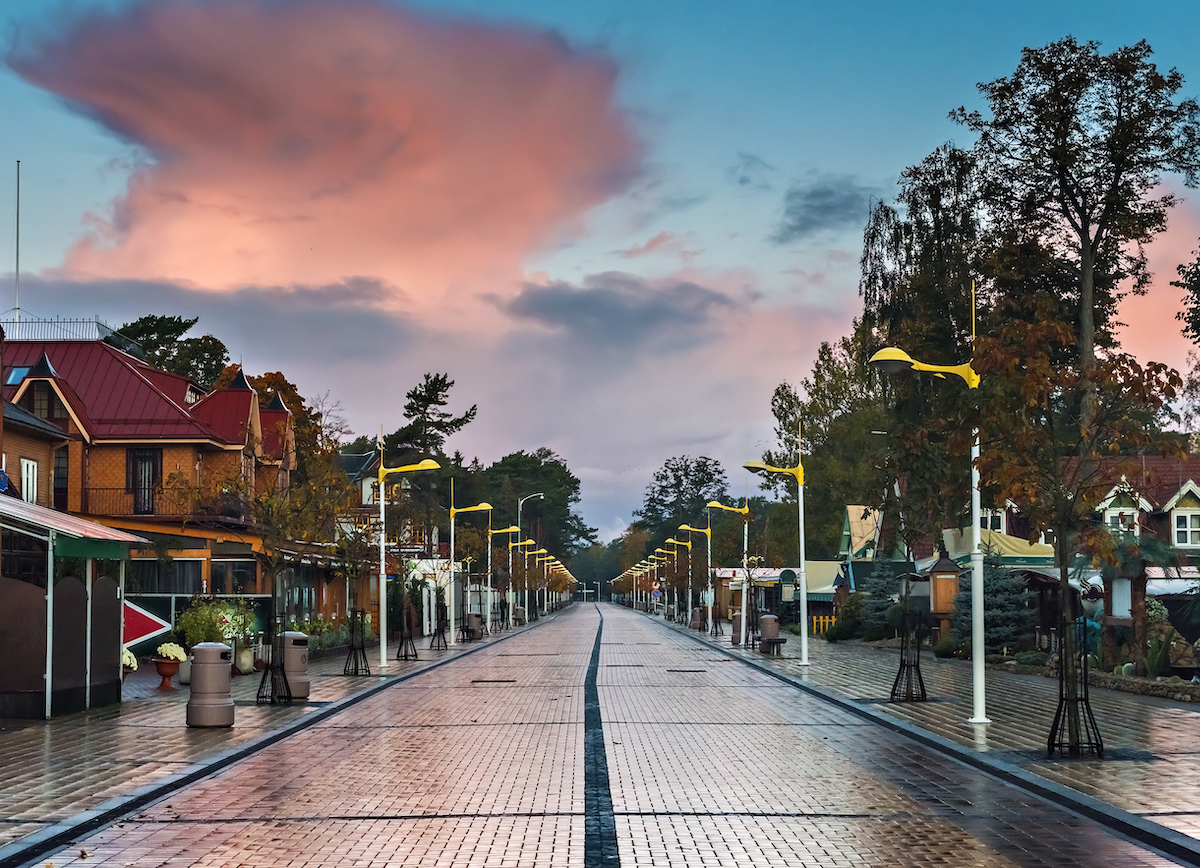
This year the Lithuanian housing market has gained momentum and optimistic views of the market participants have spread from the capital city to the coastal region. Whereas investments of developers in the big cities of the country (construction of residential project starts or purchases of land plots for future projects take place) are currently much needed to balance the ratio between supply and demand of housing, the expansion of the housing market in the coastal region, for example, does not look very sustainable. The Lithuanian coastal region is in its heyday due to the limited travelling abroad because of the pandemic, and the number of those who want to direct their investments in the housing sector has significantly increased. According to the data of the Centre of Registers, in 2019 about EUR 103 million were spent on housing (apartments and houses) and premises/ buildings of recreational purpose purchase in Palanga and Neringa municipalities, in 2020, this number amounted to EUR 154 million, and in the first nine months of 2021 reached EUR 163 million. It means that investments from individuals and business in the coastal region of Lithuania have doubled in the last several years.
It is likely that when travel abroad gets back on track, the attractiveness of this region might naturally decline as well as the newly found interest in its real estate. If investments in the coastal region of Lithuania will continue to rise further (development of new projects and purchases of housing), such likely “standoff” of demand may end in the unrealised exaggerated expectations of investors. The extremely sudden growth of any real estate segment also increases the level of risk which becomes evident when the situation in the market changes, especially, when demand staggers.
Full review (PDF): Lithuania Residential Market Commentary Q3 2021
Latest news
 All news
In 2025 developers built only half as much as buyers purchased
In 2025, the Lithuanian housing market was characterised by a particularly rapid increase in housing sales volumes in both the secondary and primary markets. According to the Ober-Haus review, a particularly rapid recovery was recorded in the primary market of large cities, where buyers were active in purchasing newly built apartments in completed and newly constructed buildings. Of all the apartments actually built and sold on the primary market, the capital city showed the greatest imbalance in 2025. According to Ober-Haus data, developers in Vilnius built 2,787 apartments for sale in apartment buildings in 2025, which was 8% more than in 2024. Meanwhile, over 5,700 apartments were sold on the primary market in Vilnius during the year, representing an increase of 82%. 'This means that developers actually built half as much as the recorded housing demand. Since the project planning and construction process is lengthy and often takes longer than planned, the rapid recovery of the market has left developers unable to meet demand," says Raimondas Reginis, Ober-Haus's market research manager for the Baltic countries. This situation is unfavourable for both buyers and developers. Buyers have limited choice and face rapidly rising prices, while developers are unable to fully exploit…
Sales of Dubysa Namai apartments in Ariogala have begun
The Dubysos Namai housing project in Ariogala is nearing completion. This five-storey residential building has been developed on a 0.75-hectare plot of land in the picturesque Dubysa Valley. This development will provide much-needed new housing for the town's real estate market, where supply has been extremely limited until now. Sales of the apartments have already begun, and prospective buyers can choose from a range of modern, well-designed homes. First-time homebuyer subsidies are available for young families. The development comprises 89 apartments, each with a storage room and parking space. The development will feature a children's playground, leisure areas, lighting and a gated entrance, creating a safe and comfortable environment for residents. Dubysos Namai offers two to four-room apartments ranging from 55 to 110 m² in size with partial finishing. The first phase of apartments has been completed and is ready for new residents to move in, while the second phase of construction is expected to be finished in Q4 of 2026. Almost all apartments have balconies and the option to install a fireplace, offering panoramic views of the Dubysa Valley. Many buyers are surprised that it is possible to install a fireplace in Dubysos Namai apartments. This is a rare…

The Šiauliai housing market is expected to see a more moderate second half of the year
Although housing prices in Šiauliai rose by 11% in 2025 and remained active at the beginning of this year, the market is expected to stabilise in summer or autumn, according to forecasts by Ober-Haus. According to data from the Centre of Registers, a total of 1,539 apartments and 253 houses were purchased in Šiauliai in 2025, representing increases of 22.9% and 22.4%, respectively, compared to 2024. According to Ober-Haus calculations, the average price of apartments in Šiauliai was €1,273 per square metre at the end of last year, which is 11% higher than a year ago. According to the company's data, the price of typical old apartments in residential areas of Šiauliai currently ranges from €1,200 to €1,800 per square metre, depending on furnishings, location and the condition of the building. Prices for newly built apartments with partial finishing in residential areas range from €2,000 to €2,800 per square metre, whereas in the city centre or the old town, prices per square metre can reach €2,500 to €3,200. Linas Juozaitis, head of the Šiauliai Ober-Haus office, comments that the highest market activity and price growth in the city was observed in the second half of last year, and similar trends…
All news