



The growth of the Klaipėda real estate market has attracted the attention of other cities


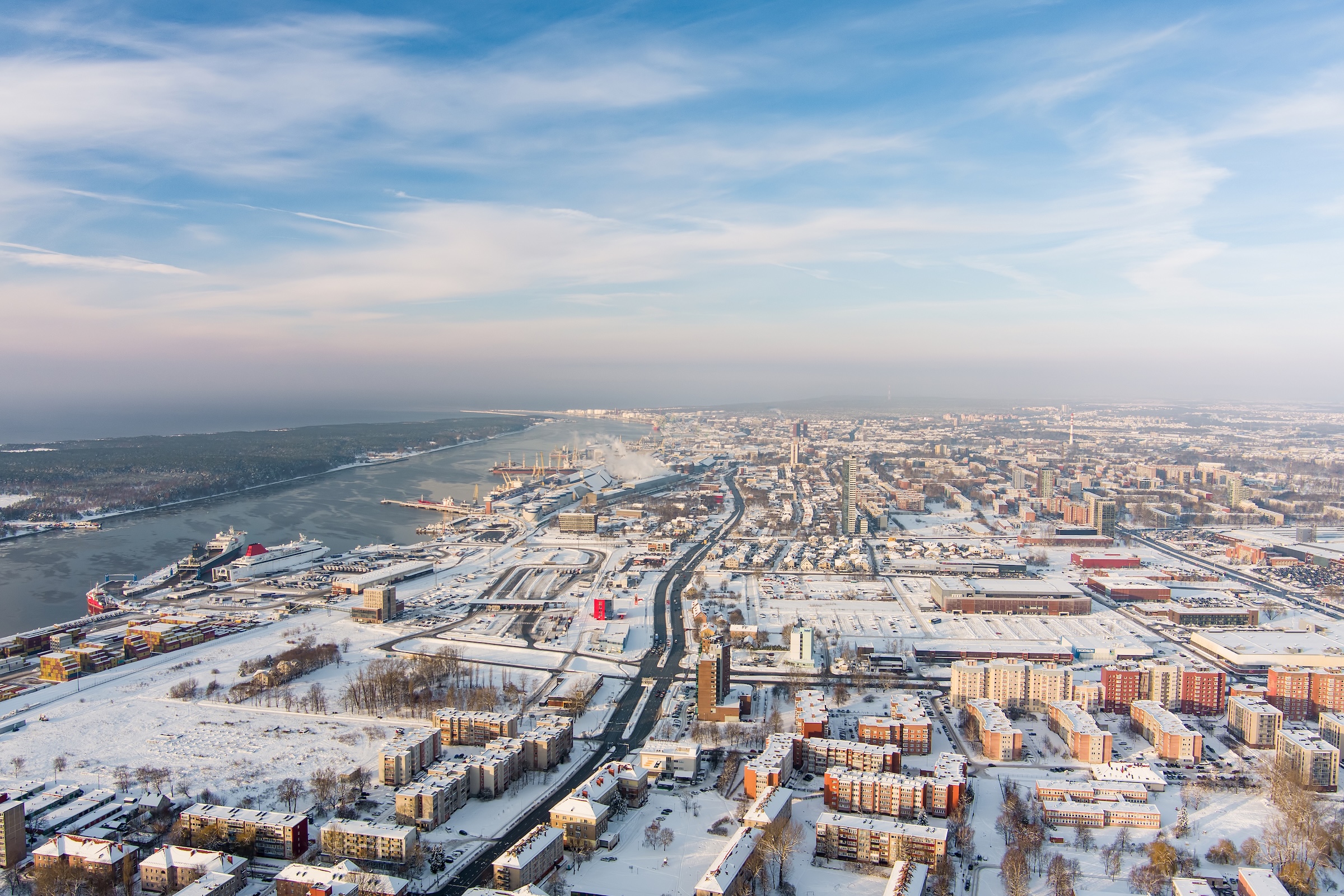
According to an analysis by real estate services company Ober-Haus, the Klaipėda real estate market stood out throughout Lithuania in 2025, with abundant construction, growing demand and a rapid increase in the number of transactions. Developers from other cities were also looking more and more boldly at the port city. After a long break, the commercial real estate sector also began to show potential in Klaipėda.
According to data from the Centre of Registers, a total of 3,369 homes (apartments and houses) were purchased in Klaipėda last year — 16.7% more than in 2024. The number of apartment transactions in the port city increased by 16.5% to reach 3,164. The housing market was much shallower, with only 205 units sold — however, this figure represented a 19.2% increase on 2024.
According to Ober-Haus calculations, the primary market in Klaipėda showed even more impressive growth, with developers selling over 580 apartments in the city last year — 65% more than in 2024.
According to the company’s data, the average price of apartments in Klaipėda reached €1,906 per square metre at the end of last year, which was 10.9% higher than a year ago. This annual rate of price change in Klaipėda slightly exceeded that in Vilnius (10.7%), but was more moderate than in Kaunas (13.8%).
Depending on factors such as the number of rooms and the district, the price of new apartments in the port city currently ranges from €2,000 to €3,800 per square metre, while older apartments cost between €1,000 and €3,700 per square metre. The highest prices are typically found in renovated buildings in the city centre, while in unrenovated apartment buildings, the price per square metre ranges from €1,000 to €2,400.
Breakthrough in residential construction
According to Aurimas Petrikas, head of Ober-Haus in the Klaipėda region, 2025 can be considered a breakthrough year for the port city. More and more new housing projects are being developed, as well as new stages on previously developed plots. The active market also meant that housing projects which had previously been difficult to initiate finally got underway last year. Despite rising prices, the number of transactions grew strongly, especially in the new housing segment.

“In Klaipėda, old, unfurnished housing remains the most in demand, often purchased at below-average prices for renovation, furnishing and resale. However, old housing is being overtaken by newly built apartments with partial finishing: these projects are performing very well and can already afford to consistently raise prices without slowing down the pace of sales,’ says A. Petrikas.
Active development of the primary market in Klaipėda is evident in new construction phases of projects such as Arimų Žiedas, Bastionų Namai, Pušyno Rezidencijos, Klaipėdos Holivudas, Memelio Miestas, Teatro Namai, Liepų Terasos, Danės Krantas, Parko Pakrantė and Dvaro Slėnis. In addition, developers have begun initial work on Jūros 1, Baltijos panorama, Miško jūra and City10 projects. New development has recently been concentrated in the city centre and the old town.
Another positive sign for the market is that developers from other cities are becoming increasingly bold in coming to Klaipėda. For instance, Eriadas has already achieved several successful sales in the port city’s new housing market. The fastest-growing neighbourhoods attracting buyers’ attention include Memelio miestas, Bastionų namai and Trinyčių rezidencija, as well as projects such as Dvaro slėnis, Danės krantas, Klaipėdos Holivudas, Liepų terasos and Saulės butai. “The growing supply in the primary market is shaping a new price level. A price of EUR 3,000 per square metre is no longer surprising in Klaipėda. With the number of transactions in the primary market growing, prices are likely to rise this year as well,” says A. Petrikas.
He believes that the requirement for a minimum down payment of 10% for a first home, which is set to be reduced in the second half of the year, will contribute to further market activity throughout Lithuania, including in Klaipėda. However, Petrikas points out that, at the same time, the conditions for purchasing a second home — for which Palanga and Šventoji are famous in the seaside region — are becoming stricter.
‘Recently, there has been increasing talk of some Lithuanian residents selling their second homes and investing in southern European countries. This trend is particularly noticeable in the Palanga property market, where many properties are second homes. While there is a slight sense of Lithuanian sentiment towards homes in southern European countries, it does not have a significant impact on the market and developers continue to build new properties on the coast. Therefore, changes in the financing of second homes are unlikely to have a significant effect on the Klaipėda region,” comments A. Petrikas.
In the rental segment, Ober-Haus has observed a clear shortage of supply in Klaipėda. According to A. Petrikas, the market there has become dependent on landlords. These landlords are able to find tenants quickly and easily by consistently raising rental prices. Over the past year, apartment rental prices have risen by about 4–5% and are now approaching €11/sq. m.
‘The apartment rental market dominates in Klaipėda, and there is practically no house rental category. Interestingly, there are enough university dormitories for students in the port city, so the rental market is driven by employees and other tenants. In Palanga, on the other hand, rentals are mainly seasonal and short-term, which does not accurately reflect long-term price trends,’ says the Ober-Haus representative.
Signs of revival in the commercial real estate market
After a decade of sluggish development, the company notes that the sector has begun to show positive signs in recent years. Real estate developers and investors in Vilnius and Kaunas have also begun to take notice. However, most of the activity so far has been further away from the Old Town.
The most visible commercial real estate trend in Klaipėda is commercial warehouses, known as ‘stock-offices’, which attracted interest and development somewhat later in the port city than in Vilnius or Kaunas. A few years ago, in the office segment, we saw lease deals being signed ‘on paper’ while construction was still underway. There was some excitement about foreign companies that might design or service a wind farm, but all that faded away last year. In the retail, catering and service premises segment, there is a clear ‘golden triangle’ between Akropolis, the arena and the swimming pool, where the largest number of residents gather, especially at weekends,’ comments A. Petrikas.
In his opinion, another prominent ‘triangle’ is emerging on Tilžės Street towards the Jakų roundabout, with storage, administrative, commercial and service facilities being developed initially. Large-scale commercial real estate transactions are also being implemented in the Klaipėda Free Economic Zone (FEZ) or in the ‘Industrial Logistics Park’ in the Klaipėda district, located in front of the free zone.
‘While the ice has certainly been broken in the Klaipėda commercial real estate market, and the coming decade looks optimistic, the old town remains a sore spot. Cafés and restaurants with significant footfall continue to close, and there are plenty of vacant premises for rent or sale.’ Businesses have effectively moved from the old town to other areas, which may put further pressure on car-related infrastructure. For example, premises anywhere in the city are currently only rented on the condition that vehicles can be parked on site,” explains A. Petrikas.
Latest news
 All news
In 2025 developers built only half as much as buyers purchased
In 2025, the Lithuanian housing market was characterised by a particularly rapid increase in housing sales volumes in both the secondary and primary markets. According to the Ober-Haus review, a particularly rapid recovery was recorded in the primary market of large cities, where buyers were active in purchasing newly built apartments in completed and newly constructed buildings. Of all the apartments actually built and sold on the primary market, the capital city showed the greatest imbalance in 2025. According to Ober-Haus data, developers in Vilnius built 2,787 apartments for sale in apartment buildings in 2025, which was 8% more than in 2024. Meanwhile, over 5,700 apartments were sold on the primary market in Vilnius during the year, representing an increase of 82%. 'This means that developers actually built half as much as the recorded housing demand. Since the project planning and construction process is lengthy and often takes longer than planned, the rapid recovery of the market has left developers unable to meet demand," says Raimondas Reginis, Ober-Haus's market research manager for the Baltic countries. This situation is unfavourable for both buyers and developers. Buyers have limited choice and face rapidly rising prices, while developers are unable to fully exploit…
Sales of Dubysa Namai apartments in Ariogala have begun
The Dubysos Namai housing project in Ariogala is nearing completion. This five-storey residential building has been developed on a 0.75-hectare plot of land in the picturesque Dubysa Valley. This development will provide much-needed new housing for the town's real estate market, where supply has been extremely limited until now. Sales of the apartments have already begun, and prospective buyers can choose from a range of modern, well-designed homes. First-time homebuyer subsidies are available for young families. The development comprises 89 apartments, each with a storage room and parking space. The development will feature a children's playground, leisure areas, lighting and a gated entrance, creating a safe and comfortable environment for residents. Dubysos Namai offers two to four-room apartments ranging from 55 to 110 m² in size with partial finishing. The first phase of apartments has been completed and is ready for new residents to move in, while the second phase of construction is expected to be finished in Q4 of 2026. Almost all apartments have balconies and the option to install a fireplace, offering panoramic views of the Dubysa Valley. Many buyers are surprised that it is possible to install a fireplace in Dubysos Namai apartments. This is a rare…

The Šiauliai housing market is expected to see a more moderate second half of the year
Although housing prices in Šiauliai rose by 11% in 2025 and remained active at the beginning of this year, the market is expected to stabilise in summer or autumn, according to forecasts by Ober-Haus. According to data from the Centre of Registers, a total of 1,539 apartments and 253 houses were purchased in Šiauliai in 2025, representing increases of 22.9% and 22.4%, respectively, compared to 2024. According to Ober-Haus calculations, the average price of apartments in Šiauliai was €1,273 per square metre at the end of last year, which is 11% higher than a year ago. According to the company's data, the price of typical old apartments in residential areas of Šiauliai currently ranges from €1,200 to €1,800 per square metre, depending on furnishings, location and the condition of the building. Prices for newly built apartments with partial finishing in residential areas range from €2,000 to €2,800 per square metre, whereas in the city centre or the old town, prices per square metre can reach €2,500 to €3,200. Linas Juozaitis, head of the Šiauliai Ober-Haus office, comments that the highest market activity and price growth in the city was observed in the second half of last year, and similar trends…
All news