



Real estate markets of the Baltics withstood the challenges of the pandemic, but became imbalanced


 Looking back at 2020, we can see that both the global and the Baltic real estate markets largely withstood the challenges posed by the current pandemic. Cheap cash injections activated on a global scale were also directed at the real estate market, where the residential property remained at the forefront with record-breaking indicators at the end of 2020 and the beginning of 2021. Looking at the global map, we can see that the home prices have been given green light as we observe faster price increase in the USA, China and Europe, including the Baltic countries.
However, the current situation can hardly make us happy. The global health crisis has not only claimed human lives, but has also unbalanced the business environment, including the real estate market. If some business sectors have recovered quickly, the prospects of other sectors remain vague. The same can be said about real estate whose prospects are directly related to the viability of specific business sectors. So far, we can see what difficult situation the managers and owners of hotels, major shopping centres or individual commercial premises face. A notable increase in home prices may also offset the relatively sustainable development (before the pandemic) of this real estate sector. These insights have just been published in the latest annual review of the real estate market of the capital cities of the Baltic countries by Ober-Haus. The review provides a comprehensive picture of the situation in the real estate market for 2020 and forecasts for the coming year.
The slow-down of development may unbalance the housing market of the capital cities of the Baltic countries
In any case, the housing market of the Baltics “benefited” most from the pandemic period in 2020. “First of all, the housing sector in Lithuania and Estonia performed strongly and witnessed all-time records – the amount of money spent on housing (apartments and houses) in a year was the highest in the history of these countries,” Raimondas Reginis, Research Manager for the Baltics at Ober-Haus, said.
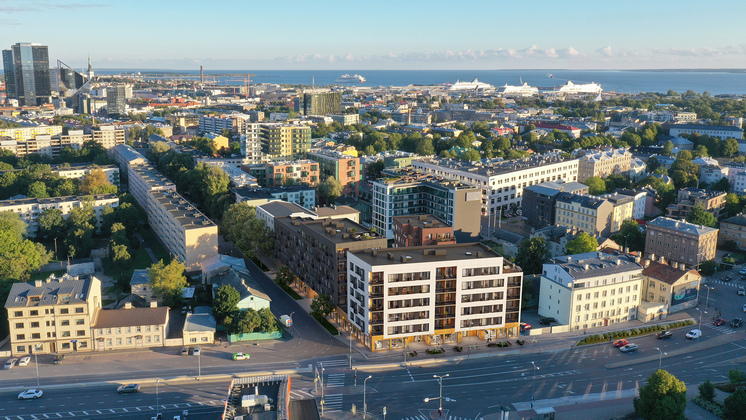
ODRA residential project in Tallinn
Despite that the number of sales transactions of apartments in the capital cities of the Baltic countries decreased from 4% to 10% in 2020, this did not have a negative impact on the sales prices of apartments. According to Ober-Haus, the sales prices of apartments in Vilnius and Tallinn continued to grow and increased by almost 5% in a year. Meanwhile in Riga, only symbolic decrease in the prices of older apartments in residential districts was noted.
Some greater negative changes were recorded in the housing rental segment of the capital cities, which in H1 2020 experienced an instantaneous increase in supply. “This led to a decrease in rents by a tenth in Riga and Tallinn over a year. Meanwhile, in Vilnius, rents for apartments slightly decreased in the middle of the year, but returned to the former level in H2 2020, which shows a strong internal demand in this fast-growing city,” Reginis said.
However, Riga’s performance seems to be the weakest among the capitals of the Baltic countries. It is affected by further deteriorating demographic indicators and the lack of confidence among the real estate market players with the lowest relative number of apartment transactions and new apartments built out of the three capitals. On the other hand, the indicators at the beginning of 2021 show that the situation in the housing markets of Vilnius and Tallinn has gained further optimism, which may lead to at least a momentary shortage of supply and greater home price increases. For example, in 2021, developers plan to build fewer apartments in all the capitals of the Baltic countries than they built in 2020. “In the meantime, Riga may benefit from a positive global mood in the housing sector by offering a significantly lower level of residential property prices and relatively faster potential for market growth and investment opportunities in the future than perhaps Vilnius or Tallinn,” Reginis noted.
Most severe disruption in the hotel sector due to the pandemic
In terms of the commercial real estate and the most affected segments by the pandemic, the advantage of the Baltic countries has been their little dependence on foreign tourism, which accounts for a relatively small part of the economy.
The hotels oriented to foreign tourists have suffered most during the pandemic across the globe, including in the Baltic countries. For example, the occupancy rates of the hotels of international hotel chains in Lithuania, Latvia and Estonia contracted almost threefold in 2020 compared to 2019. As a result, this business and the real estate segment experienced the steepest decline in 2020 and continues to stagnate under the current pandemic in 2021.
“It is not surprising that in 2020–2021 we saw the sale of some hotel buildings to new investors who are planning to adapt the buildings for different business activities, for example, housing for long-term or short-term rent,” Reginis pointed out.
Rental income of retail premises – from a double-digit decline to inflation rate size growth
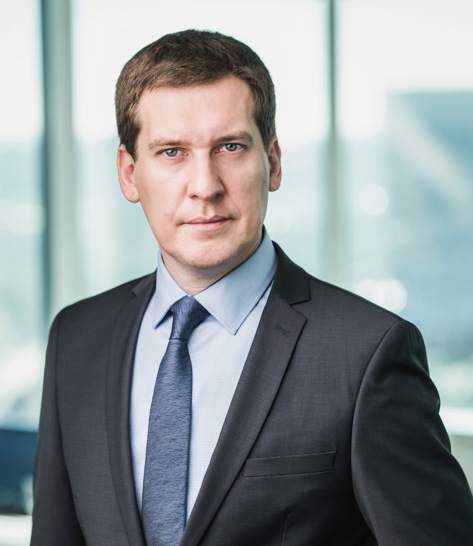
Raimondas Reginis, Research Manager for the Baltics at Ober-Haus
The retail premises sector is also among the most affected real estate segments in the Baltic countries. Full or partial closure of retail outlets had a significant impact on the turnover of the major shopping centres, which resulted in significantly lower rental income for property owners in 2020.
“Depending on the shopping centre tenant mix structure, changes in occupancy and rent discounts granted to tenants, the operating income of companies managing such properties has shrunk from a few percent to a few dozen percent. We can imagine the situation in which the tenants and owners of individual commercial premises found themselves, where shops, cafes or bars could not carry out their activities or had a very small customer flow,” Reginis said.
However, not all businesses in the retail premises sector suffered losses in 2020. Supermarkets with large grocery store chains enjoyed a continuous flow of shoppers and the owners of such supermarkets were guaranteed even higher rental income than in 2019. Like in previous years, rents in such supermarkets were increased by landlords based on the inflation rate of the previous year.
Ample opportunities to office tenants in the face of the pandemic
The office sector also experienced significant changes in 2020. Although the offices were physically empty following the change in the work format, the companies did not start terminating tenancy contracts and managers of office buildings were able to maintain a stable flow of rental income.
However, in 2020 the markets of capital cities in the Baltics saw a significant increase in office supply, which coincided with the pandemic period. This raises legitimate concerns of market players regarding the sustainable development and prospects of this real estate segment in the near future. According to Ober-Haus, in 2020 developers built 186,100 sqm of office space in Vilnius, Riga and Tallinn, or 30% more than in 2019 (in Vilnius – 102,600 sqm, in Riga – 49,500 sqm, and in Tallinn – 34,000 sqm).
A significant proportion of the companies’ employees are currently fully or partly working from home, and the ongoing pandemic prevents companies from accurately assessing their needs for office space in the future. According to Reginis, under these uncertain conditions it is still difficult to assess the direction that the post-pandemic business model will take, on which the demand for office space will depend in the future.
“Looking at the current market, a significant number of companies are still delaying strategic decisions regarding further development of offices or optimization of the available space. However, regular offers of office sublease that appear on the market, where tenants are looking for sub-tenants for their rented premises, indicate that some companies have decided to reduce their office space without any delay,” the Ober-Haus representative said.
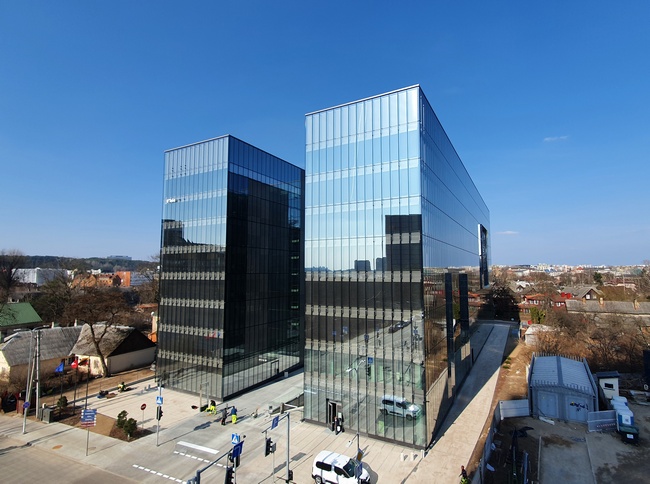
LVOVO office project in Vilnius
If there is still uncertainty about the future demand for offices, the supply factor is more predictable in the capital city of Lithuania. In 2020, the market in Vilnius saw a record supply of office space, which was successfully absorbed by the market and the office vacancy rate in Vilnius in 2020 increased relatively moderately – from 3.0% to 6.1%.
However, developers may expect greater challenges with further increase in office space in the market, which in 2021 will be at least 130,000 sqm. According to Reginis, such significant amount of office space in the context of the pandemic may pose challenges not only for the developers of the new projects but also for the owners of older buildings.
The risk of company office space optimization may only be compensated by newly arriving companies or expansion of already operating businesses in the capital cities of the Baltic countries. Yet the increasing vacancy rate in all capital cities of the Baltic countries shows that the new supply of offices comes under particularly unfavourable circumstances and tenants of the offices may be the ones to benefit from it.
Riga was the leader in warehouse development; developers in Vilnius embarked on the multi-functional projects
The industrial real estate sector in the Baltic countries had all the preconditions for further growth in 2020. According to Ober-Haus, 208,000 sqm of new warehouse space was built in Vilnius, Riga, Tallinn and their surroundings during the year, which is 46% more than in 2019.
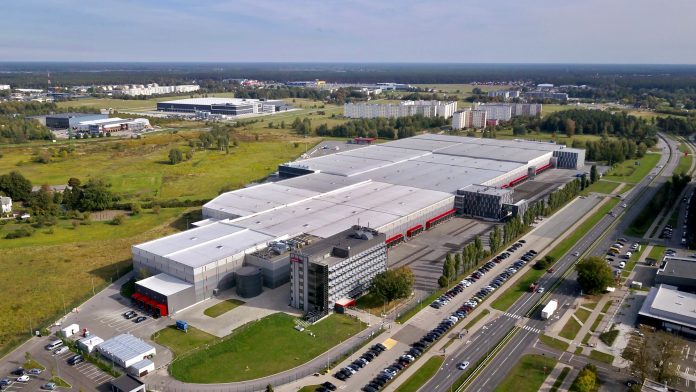
RIMI LOGISTIC CENTRE, Riga
In 2020, the largest number of new warehouse space was built in Riga, including the development of the largest logistics centre in the Baltic countries. The Rimi warehousing and distribution centre was built by renovating some old space and adding some new buildings. The total area of the complex is 84,000 sqm, of which 74,000 sqm are dedicated to the production storage.
Meanwhile, in Vilnius, in addition to the relatively active development of traditional warehouses, in 2020 development of stock-office concept projects started. “If such projects have already been implemented in Tallinn for some time and in Riga for at least the past few years, so in Vilnius such first larger-scale projects will only be implemented in 2021,” Reginis noted.
Projects offering spaces of various sizes for various purposes under one roof may attract a much larger number of potential tenants, which allows for more flexible planning of the implementation of such projects. “Currently, near ten projects of this type are planned in Vilnius and construction of some of them is in progress. Rapidly expanding online sales and the need to deliver products to end users quickly or to have a suitable product pick-up point contributes to the development of these projects,” Reginis added.
According to Statistics Lithuania, the turnover of mail order or sale via internet businesses between 2015 and 2019 increased by 28% each year on average, while in 2020 an increase of 52% and the record turnover of EUR 814 million was recorded.
Full review (PDF): Baltics Real Estate Market Report 2021
Latest news
 All news
In 2025 developers built only half as much as buyers purchased
In 2025, the Lithuanian housing market was characterised by a particularly rapid increase in housing sales volumes in both the secondary and primary markets. According to the Ober-Haus review, a particularly rapid recovery was recorded in the primary market of large cities, where buyers were active in purchasing newly built apartments in completed and newly constructed buildings. Of all the apartments actually built and sold on the primary market, the capital city showed the greatest imbalance in 2025. According to Ober-Haus data, developers in Vilnius built 2,787 apartments for sale in apartment buildings in 2025, which was 8% more than in 2024. Meanwhile, over 5,700 apartments were sold on the primary market in Vilnius during the year, representing an increase of 82%. 'This means that developers actually built half as much as the recorded housing demand. Since the project planning and construction process is lengthy and often takes longer than planned, the rapid recovery of the market has left developers unable to meet demand," says Raimondas Reginis, Ober-Haus's market research manager for the Baltic countries. This situation is unfavourable for both buyers and developers. Buyers have limited choice and face rapidly rising prices, while developers are unable to fully exploit…
Sales of Dubysa Namai apartments in Ariogala have begun
The Dubysos Namai housing project in Ariogala is nearing completion. This five-storey residential building has been developed on a 0.75-hectare plot of land in the picturesque Dubysa Valley. This development will provide much-needed new housing for the town's real estate market, where supply has been extremely limited until now. Sales of the apartments have already begun, and prospective buyers can choose from a range of modern, well-designed homes. First-time homebuyer subsidies are available for young families. The development comprises 89 apartments, each with a storage room and parking space. The development will feature a children's playground, leisure areas, lighting and a gated entrance, creating a safe and comfortable environment for residents. Dubysos Namai offers two to four-room apartments ranging from 55 to 110 m² in size with partial finishing. The first phase of apartments has been completed and is ready for new residents to move in, while the second phase of construction is expected to be finished in Q4 of 2026. Almost all apartments have balconies and the option to install a fireplace, offering panoramic views of the Dubysa Valley. Many buyers are surprised that it is possible to install a fireplace in Dubysos Namai apartments. This is a rare…

The Šiauliai housing market is expected to see a more moderate second half of the year
Although housing prices in Šiauliai rose by 11% in 2025 and remained active at the beginning of this year, the market is expected to stabilise in summer or autumn, according to forecasts by Ober-Haus. According to data from the Centre of Registers, a total of 1,539 apartments and 253 houses were purchased in Šiauliai in 2025, representing increases of 22.9% and 22.4%, respectively, compared to 2024. According to Ober-Haus calculations, the average price of apartments in Šiauliai was €1,273 per square metre at the end of last year, which is 11% higher than a year ago. According to the company's data, the price of typical old apartments in residential areas of Šiauliai currently ranges from €1,200 to €1,800 per square metre, depending on furnishings, location and the condition of the building. Prices for newly built apartments with partial finishing in residential areas range from €2,000 to €2,800 per square metre, whereas in the city centre or the old town, prices per square metre can reach €2,500 to €3,200. Linas Juozaitis, head of the Šiauliai Ober-Haus office, comments that the highest market activity and price growth in the city was observed in the second half of last year, and similar trends…
All news