



Office sublease: thousands of invisible square metres


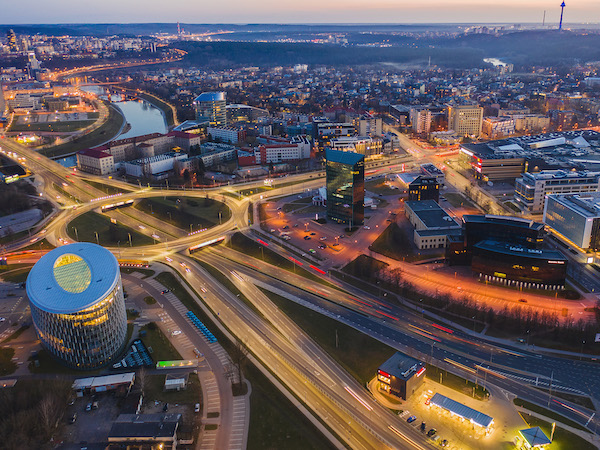
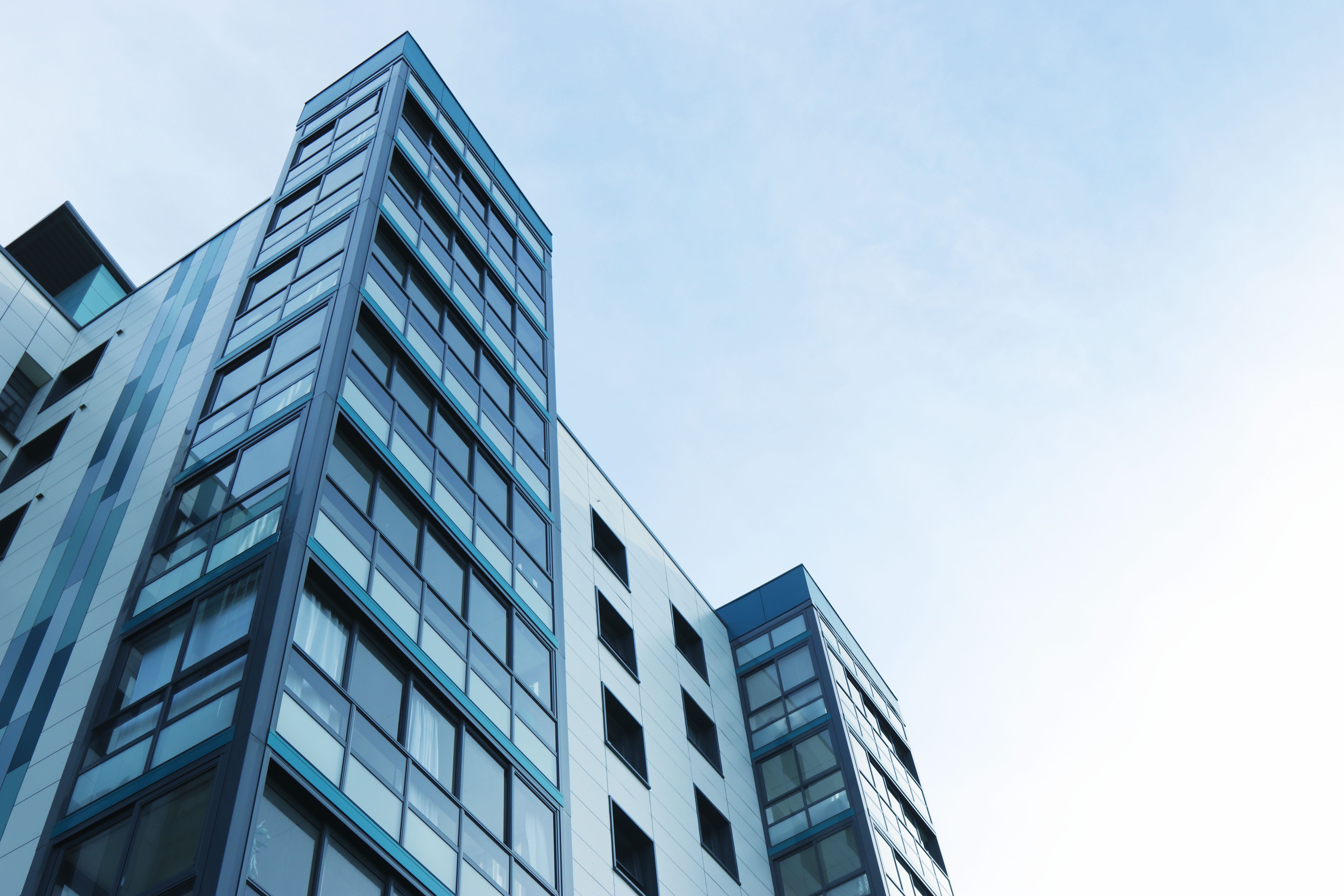 In the office segment, the phenomenon of sublease – the transfer of part of a company’s leased premises to a third party – became popular during the pandemic and has remained since. The market of subleased property is usually not included in the official statistics published by real estate agencies. According to OBER-HAUS, current tenants of Class A and Class B+ business centres in Vilnius alone could be offering several thousand or even tens of thousands of square metres of space for sublease.
Sublease is usually simply understood as renting space not directly from the owner or manager of a business centre, but from an existing tenant established and operating in the business centre. The principle of sublease itself existed long before the pandemic, but has only become more popular in recent years as businesses switched to remote or hybrid work, consequently, the amount of space required for their operations has decreased.
OBER-HAUS estimates that since the beginning of the pandemic, the average office space in Vilnius has decreased by about 30%. In other words, companies entering into new contracts today are renting office space by almost a third smaller than a few years ago. However, office lease contracts are usually long-term and companies have invested considerable amounts in fitting out the leased offices, so subleasing part of the space is an attractive option of using the space that has for various reasons become available. This is particularly relevant when the existing lease agreement does not allow the company to surrender part of its space without incurring a penalty.
Sublease has its advantages and disadvantages for each of the parties. Subleasing part of the premises allows the existing tenants to reduce the financial burden of the unused space, either fully or partially. On the other hand, some companies deliberately lease surplus space as a reserve for future expansion and then sublease part of the space temporarily in the first year. Among sublessors, there are also medium-sized and large, well-known companies that have failed to expand or postponed their expansion and recruitment plans. The only disadvantage of sublease for the sublessor may be the fact that the common areas of the office can be used by people who are not part of the company, yet this challenge is solved by simple interior redesign solutions.
From a subtenant’s perspective, the biggest advantages of sublease are fully furnished premises in attractive business centres, the possibility of moving in very quickly and flexible lease terms. Sublease options are readily available to companies looking for a shorter lease term or a fully furnished office. Sublease is also of interest to businesses that have a strategic need to be located in a particular business centre, but the business centre cannot offer free space. Finally, some businesses choose sublease as a trial period before renting larger premises directly or renting premises for a temporary project or a team. But these options contain disadvantages: such premises are usually leased for a short period of time – a few months or a few years – and it will usually be impossible to adapt the furnished premises to their needs.
The price factor in the sublease market has no clear rules. On the one hand, a subleased space is usually fully furnished, so the subtenant can move straight in, but this is factored into the higher price per square metre. Also, the flexibility of sublease and shorter terms tend to push the price upwards. On the other hand, the financial burden of unused space and the possible penalties for the existing tenant may force the tenant to sublease the available space at a rate below market prices. Each sublease case is therefore individual, but flexible and optimal arrangements are certainly possible in the market.
Sublease is generally tolerated and not opposed to by managers or owners of business centres. Although many standard lease agreements stipulate that sublease is only allowed with the manager’s approval, in practice the approval is usually obtained if the interested party meets the owner’s requirements. Managers of business centres have a clear motivation for this as sublease helps to maintain planned income streams and there is always the possibility that the subtenant will become a direct and long-term tenant in the future.
Sublease is referred to as a ‘hidden vacancy’ by property market participants – its official size is not disclosed. Offices are offered for sublease in the same way as offices for lease in the primary market, but usually through specialist brokers, not publicly. Currently, the official vacancy rate in the primary office market in Vilnius is around 8%: 6% in Class A and 9% in Class B business centres. Rents, excluding VAT, in Class A business centres today range from 16.5 to 20 EUR/sqm and in Class B business centres – from 13 to 15 EUR/sqm. Vacancy at the rate of 8% in Vilnius today would mean about 86,000 sqm of office space available for rent on the primary market, but this figure does not include the subleased office space market, which, according to various estimates, may stand at 10,000 sqm or even more. Moreover, not every company has yet considered the possibility of subletting part of its premises, so this market certainly still has a huge reserve.
Far from being a grey or shadow market, its growth is simply an illustration of the changes taking place in business across the world, for which property developers will eventually offer sustainable solutions. So far, sublease has remained a significant niche market, harder to see with the naked eye, but which can create flexibility for both tenants and landlords.
Latest news
 All news

In 2025 developers built only half as much as buyers purchased
In 2025, the Lithuanian housing market was characterised by a particularly rapid increase in housing sales volumes in both the secondary and primary markets. According to the Ober-Haus review, a particularly rapid recovery was recorded in the primary market of large cities, where buyers were active in purchasing newly built apartments in completed and newly constructed buildings. Of all the apartments actually built and sold on the primary market, the capital city showed the greatest imbalance in 2025. According to Ober-Haus data, developers in Vilnius built 2,787 apartments for sale in apartment buildings in 2025, which was 8% more than in 2024. Meanwhile, over 5,700 apartments were sold on the primary market in Vilnius during the year, representing an increase of 82%. 'This means that developers actually built half as much as the recorded housing demand. Since the project planning and construction process is lengthy and often takes longer than planned, the rapid recovery of the market has left developers unable to meet demand," says Raimondas Reginis, Ober-Haus's market research manager for the Baltic countries. This situation is unfavourable for both buyers and developers. Buyers have limited choice and face rapidly rising prices, while developers are unable to fully exploit…
Sales of Dubysa Namai apartments in Ariogala have begun
The Dubysos Namai housing project in Ariogala is nearing completion. This five-storey residential building has been developed on a 0.75-hectare plot of land in the picturesque Dubysa Valley. This development will provide much-needed new housing for the town's real estate market, where supply has been extremely limited until now. Sales of the apartments have already begun, and prospective buyers can choose from a range of modern, well-designed homes. First-time homebuyer subsidies are available for young families. The development comprises 89 apartments, each with a storage room and parking space. The development will feature a children's playground, leisure areas, lighting and a gated entrance, creating a safe and comfortable environment for residents. Dubysos Namai offers two to four-room apartments ranging from 55 to 110 m² in size with partial finishing. The first phase of apartments has been completed and is ready for new residents to move in, while the second phase of construction is expected to be finished in Q4 of 2026. Almost all apartments have balconies and the option to install a fireplace, offering panoramic views of the Dubysa Valley. Many buyers are surprised that it is possible to install a fireplace in Dubysos Namai apartments. This is a rare…

The Šiauliai housing market is expected to see a more moderate second half of the year
Although housing prices in Šiauliai rose by 11% in 2025 and remained active at the beginning of this year, the market is expected to stabilise in summer or autumn, according to forecasts by Ober-Haus. According to data from the Centre of Registers, a total of 1,539 apartments and 253 houses were purchased in Šiauliai in 2025, representing increases of 22.9% and 22.4%, respectively, compared to 2024. According to Ober-Haus calculations, the average price of apartments in Šiauliai was €1,273 per square metre at the end of last year, which is 11% higher than a year ago. According to the company's data, the price of typical old apartments in residential areas of Šiauliai currently ranges from €1,200 to €1,800 per square metre, depending on furnishings, location and the condition of the building. Prices for newly built apartments with partial finishing in residential areas range from €2,000 to €2,800 per square metre, whereas in the city centre or the old town, prices per square metre can reach €2,500 to €3,200. Linas Juozaitis, head of the Šiauliai Ober-Haus office, comments that the highest market activity and price growth in the city was observed in the second half of last year, and similar trends…
All news