
 Search


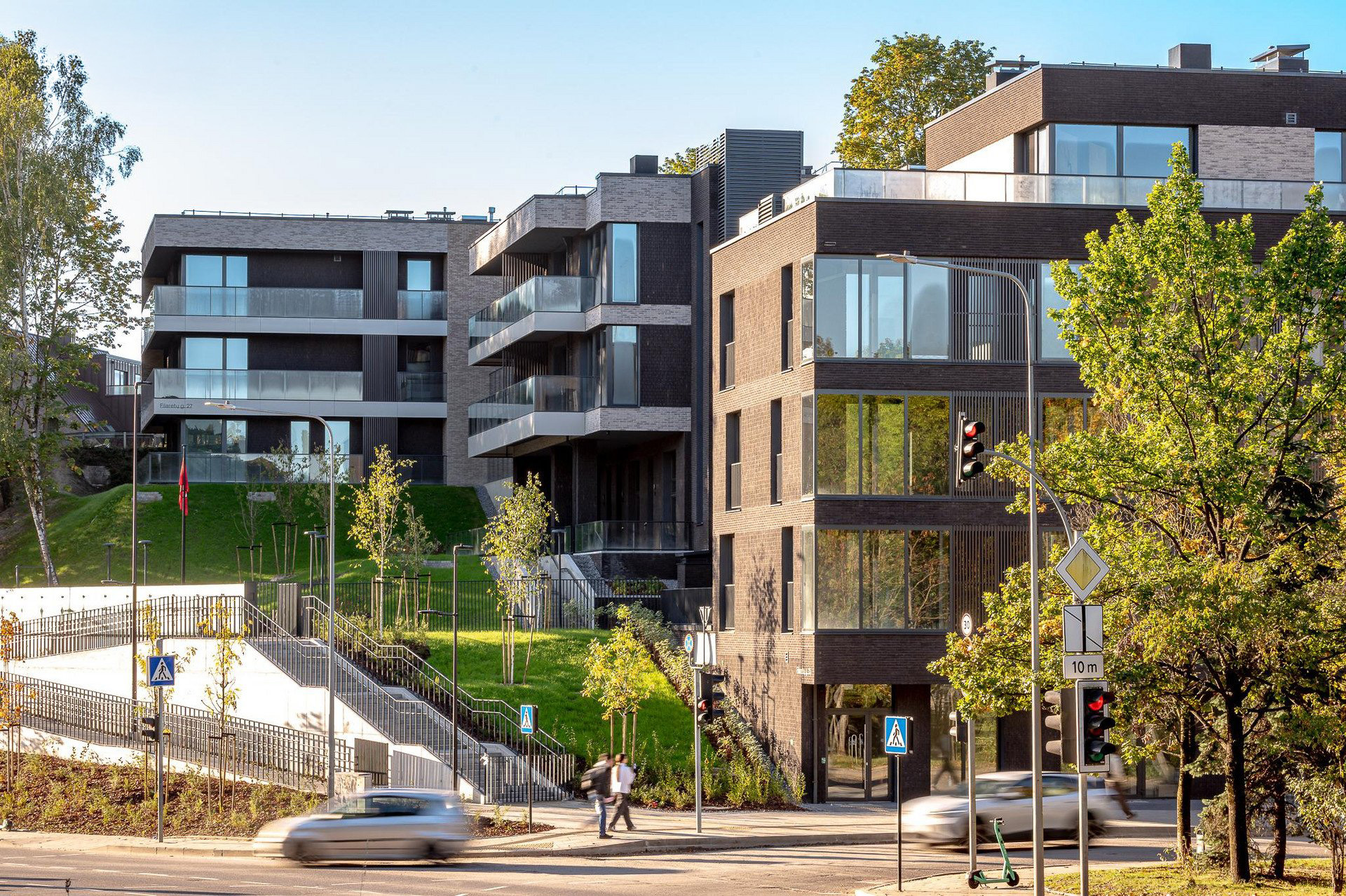
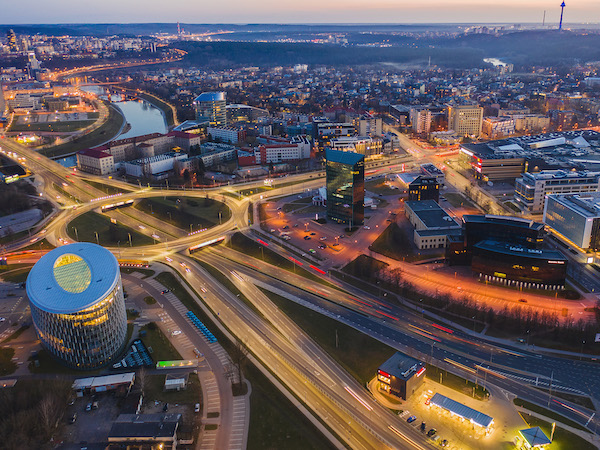
In 2025, the Lithuanian housing market was characterised by a particularly rapid increase in housing sales volumes in both the secondary and primary markets. According to the Ober-Haus review, a particularly rapid recovery was recorded in the primary market of large cities, where buyers were active in purchasing newly built apartments in completed and newly constructed buildings. Of all the apartments actually built and sold on the primary market, the capital city showed the greatest imbalance in 2025.
According to Ober-Haus data, developers in Vilnius built 2,787 apartments for sale in apartment buildings in 2025, which was 8% more than in 2024. Meanwhile, over 5,700 apartments were sold on the primary market in Vilnius during the year, representing an increase of 82%.
‘This means that developers actually built half as much as the recorded housing demand. Since the project planning and construction process is lengthy and often takes longer than planned, the rapid recovery of the market has left developers unable to meet demand,” says Raimondas Reginis, Ober-Haus’s market research manager for the Baltic countries. This situation is unfavourable for both buyers and developers. Buyers have limited choice and face rapidly rising prices, while developers are unable to fully exploit the market’s potential.
The most intensive development is taking place in residential areas, with apartment sizes remaining stable
In 2025, developers built new apartments in 16 districts of Vilnius. Five city districts attracted the most attention from developers, accounting for more than half of all new apartments: Verkių sen. (19.5%), Žirmūnų sen. (9.7%), Pašilaičių sen. (9.4%), Justiniškės (9.1%), and Naujininkai (8.0%).
R. Reginis points out that, in the city centre, where opportunities for developing new projects are limited and complex, implementation takes significantly longer than for typical apartment buildings in other parts of the city. ‘Therefore, the number of newly built apartments here is not large, and buyers are forced to wait more than a year for construction to be completed,’ says the expert. For instance, apartments built in the Naujamiesčio and Senamiesčio districts accounted for just 10% in 2025 (16% in 2024). In recent years, there has been more active investment in the southern part of Naujamiesčio and Senamiesčio as there are still quite a few old buildings and areas suitable for conversion. Projects such as Stepono sodas, Naujamiesčio trio, Off!, Naujamiesčio vingis, Algirdo alėja, Senamiesčio sodai, Vilniaus Džiazas and Sanguškų parkas are already being implemented in this part of the city.
Meanwhile, the average size of apartments built for sale has remained stable over the past three years, hovering around 50 square metres. According to Ober-Haus data, the average apartment size in multi-family buildings constructed in Vilnius in 2025 was 50.1 square metres, which is slightly larger than the lowest figure of 49.5 square metres recorded in 2024.
‘Buyers looking for more spacious and affordable housing often look for alternatives on the outskirts of cities. The large number of detached and semi-detached houses being built near large cities indicates the demand for such housing — people are buying plots of land and building their own houses, purchasing them on the secondary market or looking for them in newly developed residential areas,’ says R. Reginis. According to data from the State Data Agency, the usable floor space of houses built in Lithuania over the past 10 years is more than three times greater than that of apartments in multi-family buildings.
Apartments in A++ energy class buildings are becoming the norm
Data collected by Ober-Haus shows that, in 2025, apartments in A++ energy class buildings accounted for 71.5% of those built for sale in the capital (compared to 40.5% in 2024). Although the requirement for new buildings to meet A++ energy efficiency standards came into force on 1 January 2021, we can see that apartment buildings with this energy rating only began to dominate four years later.
Apartments in A+ energy class buildings accounted for 17.9% in 2025 (compared to 22.4% in 2024), while those in A class buildings accounted for just 5.4% (compared to 30.6% in 2024). The remaining apartments (5.2%) were in buildings with a B energy class or lower.
Up to a quarter fewer apartments have been built in Kaunas and Klaipėda
The number of apartments built in Kaunas has declined for two consecutive years. According to Ober-Haus data, developers in Kaunas built 659 apartments for sale in multi-family buildings in 2025, which is 21% fewer than in 2024 and 2.3 times fewer than in 2023, when construction volumes were at their highest.
R. Reginis attributes the sudden decline in housing sales in 2022–2023 to dampening developers’ enthusiasm and limiting their ability to start new housing projects, resulting in fewer apartments being built in 2024–2025. Meanwhile, demand for housing has grown rapidly in recent years. For example, over 1,200 apartments were sold in the primary apartment market in Kaunas in 2025. This means that demand for new apartments in the city was almost double the number actually built.
Similar trends were observed in Klaipėda in 2025, where developers built 364 apartments for sale in multi-family buildings, which was 24% less than in 2024. As in other major cities in the country, the number of apartments built was insufficient to meet demand for new housing; developers agreed to sell more than 580 new apartments in the port city in 2025.
The results of increased investment in apartment development will be visible by 2026
Following the particularly rapid recovery of the housing market in 2025, developers rushed to invest in new construction projects. Consequently, in 2026, a much larger number of apartments will be built for sale in the country’s major cities. Ober-Haus estimates that up to 4,500 apartments will be built for sale in Vilnius in 2026, which is 60% more than in 2025. In Kaunas, developers plan to build around 950 apartments, 45% more than in 2025.
Meanwhile, up to 600 apartments are expected to be built for sale in Klaipėda in 2026, which would represent the highest number of apartments built in the city since 2009. R. Reginis notes that the biggest changes in the port city in recent years have been seen in the city centre – specifically the Old Town area – where developers have begun investing in larger, higher-class projects.
The first stage of Memelio Miestas is currently being completed, as is the Teatro Namai apartment building on Žvejų Street. Construction of the Bastionų Namai project is ongoing, and the Trinyčių Rezidencijos project has begun on a 5-hectare site. The former Klaipėda court and prison complex on Jūros Street is also being renovated to offer a variety of commercial and residential premises.
‘The projects being developed in the most valuable part of the city will finally offer buyers a much wider range of housing options. Such projects will significantly increase the upper limit of apartment prices in Klaipėda, which were previously much lower than in Vilnius or Kaunas due to the extremely limited supply of high-end housing,’ says R. Reginis.
However, the increase in the volume of apartment construction in the country’s major cities does not mean that enough housing is being built. R. Reginis comments that the current level of demand for new housing indicates that too little is being built at present. The greatest imbalance between supply and demand remains in Vilnius and Kaunas. This is illustrated by the proportion of housing sold in these cities. For instance, around 55% of the apartments planned for construction in Klaipėda in 2026 have already been sold or reserved, compared to 70% in Kaunas and Vilnius. Therefore, it is crucial that developers actively start new projects in 2026 to avoid a housing shortage for buyers in 2027–2028. ‘To achieve a healthy balance between supply and demand, more than 5,000 new apartments should be built in the capital each year,’ calculates R. Reginis. This is particularly relevant if the housing market remains as active as it was in early 2026.
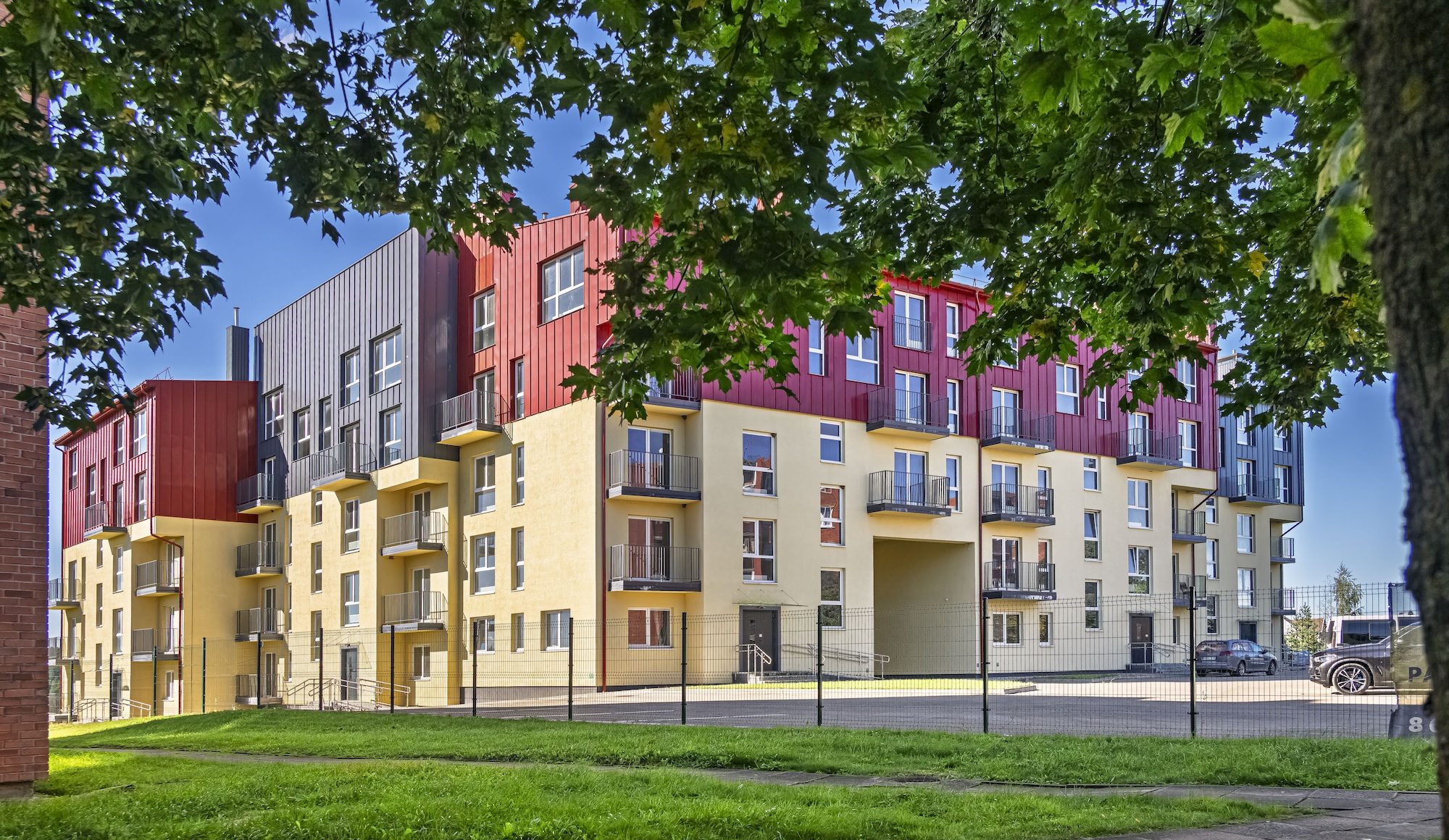
The Dubysos Namai housing project in Ariogala is nearing completion. This five-storey residential building has been developed on a 0.75-hectare plot of land in the picturesque Dubysa Valley. This development will provide much-needed new housing for the town’s real estate market, where supply has been extremely limited until now. Sales of the apartments have already begun, and prospective buyers can choose from a range of modern, well-designed homes. First-time homebuyer subsidies are available for young families.
The development comprises 89 apartments, each with a storage room and parking space. The development will feature a children’s playground, leisure areas, lighting and a gated entrance, creating a safe and comfortable environment for residents.
Dubysos Namai offers two to four-room apartments ranging from 55 to 110 m² in size with partial finishing. The first phase of apartments has been completed and is ready for new residents to move in, while the second phase of construction is expected to be finished in Q4 of 2026. Almost all apartments have balconies and the option to install a fireplace, offering panoramic views of the Dubysa Valley.
Many buyers are surprised that it is possible to install a fireplace in Dubysos Namai apartments. This is a rare feature in apartment buildings, adding exclusivity and long-term value to the home. We are seeing an increasing number of buyers looking not only for square metres, but also for the emotional value that cosy, bespoke features provide,” says Audronė Urbanavičienė, the project’s sales manager.
Another unique feature of the project is that the apartments on the top floors span two storeys. Two-storey apartments are rare in this region. This design provides more space, light and privacy. It makes it possible to clearly separate relaxation and work areas, which is especially important for those who work from home,” says Indrė Zailskaitė, the project’s sales manager.
Dubysos Namai is located in the centre of Ariogala, providing residents with convenient transport links and all the necessary infrastructure. Educational institutions, shopping centres, a polyclinic and a kindergarten are nearby, and the Dubysa Valley is just a few steps away. This location allows residents to enjoy the conveniences of city life while being close to nature, which is particularly appreciated by families and active individuals.
‘Our aim is to breathe new life into this place and contribute to the growth of the town. The landscaped area and high-quality living environment will help create a more vibrant Ariogala and positively impact the value of real estate across the area,” says A. Urbanavičienė.
The Dubysos Namai project is being implemented by UAB Profilena, with the Ober-Haus team handling sales and marketing.
Find out more about the project at www.dubysosnamai.lt.

Although housing prices in Šiauliai rose by 11% in 2025 and remained active at the beginning of this year, the market is expected to stabilise in summer or autumn, according to forecasts by Ober-Haus.
According to data from the Centre of Registers, a total of 1,539 apartments and 253 houses were purchased in Šiauliai in 2025, representing increases of 22.9% and 22.4%, respectively, compared to 2024. According to Ober-Haus calculations, the average price of apartments in Šiauliai was €1,273 per square metre at the end of last year, which is 11% higher than a year ago.
According to the company’s data, the price of typical old apartments in residential areas of Šiauliai currently ranges from €1,200 to €1,800 per square metre, depending on furnishings, location and the condition of the building. Prices for newly built apartments with partial finishing in residential areas range from €2,000 to €2,800 per square metre, whereas in the city centre or the old town, prices per square metre can reach €2,500 to €3,200.
Linas Juozaitis, head of the Šiauliai Ober-Haus office, comments that the highest market activity and price growth in the city was observed in the second half of last year, and similar trends have continued into early 2026. However, he notes that the supply of rental housing is growing in Šiauliai and that the effect of second-tier pension funds on the real estate market is likely to be minimal due to the small amounts involved. This should lead to stabilisation of sales prices by the middle of the year.
The average number of apartments for sale has fallen from 300 in recent months to 150–170, which is currently driving up prices. However, the opposite is true in the rental segment, where supply has risen from the usual 40–50 apartments to around 120. “The population of the city did not increase last year and there were no new reasons for the rental segment to grow. Several new apartment buildings will enter the market in the second half of the year, so we should enter a stabilisation phase,” says L. Juozaitis.
According to Ober-Haus data, two-room apartments in older buildings (1963–1988) remain the most popular in Šiauliai. Unlike in the past, apartments on the ground floor have become the most attractive in the city in recent years and there is a shortage of them on the market. Conversely, apartments on upper floors take the longest to sell and have the lowest prices.
A record level of developer activity is expected in the new construction segment this year and in the coming years. Apartment buildings are under development on the streets of Vilnius, Malūno, Trakai, Paukščių Tako, Birutė and Gytari. Older buildings are also being converted into modern housing, including the former central city bathhouse on Basanavičiaus Street, the former vocational school on Pagėgių Street, and the former school on Kviečių Street. According to L. Juozaitis, these new homes should find buyers due to increased interest among Šiauliai residents in new construction.
The situation in the rental market
According to Ober-Haus calculations, an annual price increase of 5-6% was recorded in the rental segment last year, i.e. rents rose almost twice as slowly as apartments for sale. The average rental price per square metre in Šiauliai is currently around €8–9 per month.
According to the company’s data, the monthly rental price for the most popular two-room apartments in residential areas of Šiauliai is currently €300–500, and in the city centre it is €350–700.
L. Juozaitis points out that the number of permanent residents in Šiauliai has grown by 10% to 111,000 over the last five years, but this change has mostly been driven by migrants from Ukraine.
In addition to Ukrainians, Šiauliai stands out in the rental segment for its foreign transport company employees and NATO soldiers, although Lithuanians still make up the majority of renters. “It’s important not to create unreasonable expectations here. The number of soldiers is not particularly large, and transport workers are often on long assignments and tend to choose hostels or nightly accommodation in Šiauliai,” says L. Juozaitis.
In his opinion, as the supply of rental apartments has increased, it would be difficult to expect further price growth. According to Ober-Haus, the purchase of investment housing for rent in Šiauliai may already have peaked, with fewer such transactions seen recently. L. Juozaitis is also sceptical about the possible effect of second-tier pension funds on secondary investment housing.

According to data from Ober-Haus, the price of apartments in Kaunas increased by 13.8% in 2025, marking the most significant change among Lithuania’s major cities. This was influenced by a limited supply of new housing, an increased proportion of higher-end projects and the renovation of old buildings.
According to the Centre of Registers, a total of 5,174 apartments and 803 houses were purchased in Kaunas in 2025, representing increases of 14% and 23% respectively compared to 2024.
According to Ober-Haus calculations, the average sale price of apartments in Kaunas at the end of 2025 was €2,071 per square metre — 13.8% higher than the previous year. This was the largest price change in Lithuania last year. By comparison, apartments in Vilnius, Klaipėda, Šiauliai and Panevėžys increased in price by 10–11% over the past year.
According to the company’s data, the price of typical old apartments in residential areas currently ranges between €1,400 and €2,400 per square metre in Kaunas, depending on furnishings, location and the condition of the building. Prices for newly built apartments with partial finishing in residential areas reach around €2,300–3,000 per square metre. In prestigious areas, the city centre or the Old Town, apartment sales prices can reach €4,000–5,000 per square metre.
Limited supply
Svajūnas Šarauskas, head of the Kaunas office of Ober-Haus, comments that the fastest rise in apartment prices in the country last year in the temporary capital is no coincidence, but was caused by increasing construction costs and stricter requirements.
‘Kaunas still lacks high-quality new housing in convenient locations, especially two- to three-room apartments, so demand currently far exceeds supply. For example, the number of apartments built in Kaunas has declined for two consecutive years,” says Šarauskas.
He mentions the alternatives favoured by residents in the suburbs, primarily in the Kaunas district, where people are building cottages and houses to gain more space and their own land at lower prices. The development of the Kaunas district has contributed to a slight decline in the city’s population in recent years, which may dampen the enthusiasm of new housing developers and consequently reduce supply.
‘Although we see quite a few people who have “had enough” of the district and are looking for more spacious apartments in the city centre again, it is likely that it is precisely this specificity of the Kaunas region that determines the slower pace of new construction in the city. I believe that Kaunas should strive to create better conditions for developing housing attractive to families and the middle classes in the city itself, as large-scale migration to the suburbs is already creating political and economic tensions, and the Kaunas district is becoming the fastest-growing municipality in the country,’ comments Šarauskas.
The Ober-Haus representative also pointed out that, last year, Kaunas saw a relatively large number of high-end projects in the riverside and central areas. This contributed to the increased price range for housing.
‘The Kaunas market itself remains active. Secondary market sales should continue to dominate the city, although we are seeing developers return to the market with new projects after a few years’ absence. Currently, the most popular properties are two- to three-room apartments (45–70 sq. m) with rational layouts, large balconies or terraces, storage rooms and parking spaces. Convenient daily logistics, green spaces, a closed, secure courtyard, infrastructure for children and low maintenance costs are the most important factors for buyers. People also increasingly value the emotional side of a project – they want to live in an environment where they can play sports, socialise and raise children, not in a ‘sleeping district’,” says S. Šarauskas.
What is being built, and what are the prospects?
According to data from Ober-Haus, the supply of new constructions in Kaunas is supported by projects that have been developed in stages over several years. Examples include Piliamiestis, Nemunaičiai, Kaunorama, Pušų Apartamentai and Namučiai. They will be joined this year by the Matau Kauną, Radio City and Ąžuolyno Uoksai projects in Šančiai, which are already under construction or in the planning stages. According to S. Šarauskas, this complex deserves special attention as it reflects new trends in Kaunas.
‘Firstly, Ąžuolyno Uoksai is changing the standard in Šančiai. This part of the city is evolving from an affordable, transitional area into a place that is increasingly attractive to the middle class, young professionals, and families. A unique feature is the planned swimming pool in the neighbourhood of the apartment block,” says Šarauskas.
He notes a growing demand for quality of life, security solutions, technical aspects, and the environment among buyers throughout the city.
‘All this shows that Kaunas residents are no longer only concerned with the price-to-space ratio, but also with everyday comfort, pedestrian accessibility, and community spirit.’ Residents expect new neighbourhoods to be more than just residential areas; they want them to be full-fledged parts of the city with services, jobs, and public spaces. In addition to the aforementioned projects, the Tesonet Group’s planned neighbourhood on Minkovskių Street, which will include a business centre, hotel, and apartments, should set a similar trend in Kaunas,’ says the Ober-Haus representative.
He mentions Vilijampolė, Žemutinė Freda and the former Kaunas Grain territory stretching along the river as among the Kaunas districts that are currently undergoing active development and have further potential. Within the city, future development can be seen in Naujamiestis, while the industrial areas of Volfas Engelman and Stumbras have conversion potential. Aleksotas is also being analysed.
‘In the longer term, I would not be surprised to see attention focused on Jonavos Street, which runs alongside the banks of the Neris River. This would require substantial investment, conversion and the complex revitalisation of residential and industrial areas, but it is already an attractive, long space with natural potential,” says S. Šarauskas.
Rental ceilings
Ober-Haus specialists recorded an annual increase in prices of 9% in the rental market last year. The average rental price per square metre in Kaunas is currently around €12 per month.
The rental price for a two-room apartment in residential areas of Kaunas is currently €360–600 per month, and in the city centre, it is €420–800 per month. S. Šarauskas already sees a certain ceiling in the rental segment, which is further reinforced by the city’s stagnant population growth.
‘The rental market should remain stable. There are around 500 apartments available, so tenants will have plenty to choose from. Although landlords have high price expectations, customers are bringing them back down to earth,” says Šarauskas.
According to the data, two-room apartments are the most popular to rent in Kaunas, followed by one-room apartments. Traditionally, the highest level of rental activity is associated with students at the end of summer and in autumn.

The large supply of new office space in Vilnius keeps rental prices stable, but also encourages more active negotiations between the parties. However, in long-term lease relationships, the most important thing is to balance mutual interests. Especially as the practical value is often determined not only by the price, but also by other aspects of the contract, such as flexibility, terms or additional conditions.
In the office market, it has been said for some time now that the scales of power are tipping towards the tenant. Last year, base rents in Class A and B business centres rose by around 2%.
Currently, monthly rents in Class A business centres are up to EUR 16-20/sqm, in new, exclusive projects they are as high as EUR 21-23/sqm, and in Class B business centres the prevailing rents are EUR 10-15/sqm.
In 2025-2026, more than 100 thousand sqm of usable office space will reach the market. Despite the continuing economic growth, office rental growth is currently constrained by the large supply of vacant space, the ongoing transformation of tele-hybrid working, conservative business expectations and geopolitical reasons.
The tenant’s market would seem to be a good time to renegotiate the terms of an existing office lease or look for new premises. However, experience shows that the office market is cyclical and that asset managers will remember both the pressure they faced and the collaborative approach of the tenant. Business centre owners generally have limited scope to reduce the price due to commitments to lenders to maintain rental levels, but it is always possible to negotiate other aspects of the lease that are less visible, leading to concrete benefits.
One favourable condition is the cost of furnishing or refurbishing an office — business centres can offer new tenants their own investment in furnishing or adapting the space to their needs. In the newest business centres, this amount typically ranges from EUR 250 to 425 per sqm.
However, if the tenant agrees to a lower investment by the business centre, they can negotiate better terms, such as a lower rent, shorter and more flexible lease terms, no rent payment during the fit-out period and other favourable conditions. Conversely, a higher-than-usual investment by the landlord in fitting out a particular tenant’s premises may result in longer lease terms (the current standard minimum term is 3–5 years), a higher deposit, higher penalties for terminating the lease before its expiry, and sometimes an additional surety bond, etc.
It is worth noting the possibility of terminating the contract before the end of the rental period. While most business centres take the position that leases are non-cancellable, obliging tenants to pay rent and related payments for the entire term of the lease, even if there is no activity on the premises, there are cases where such a clause becomes a serious constraint. However, in practice, such a clause can pose a serious problem in cases of decreasing demand for office space or when companies seek to optimise rental costs, for example. In such cases, subletting unused space to another tenant can help. According to our calculations, such space in Vilnius currently exceeds 10,000 sq m. It is true that, even if termination of the contract is agreed upon before the scheduled time, landlords will still seek compensation for lost income, fitting-out costs, and the cost of finding a new tenant.
The inflation spike in 2022 has also highlighted the issue of rent indexation. Depending on the indexation rate, which can be as high as 8%, rents have risen by between 5% and 25% at the beginning of 2023. Consequently, lease contracts currently often include maximum price indexation limits of 4–6%. Other negotiating options may include indexation based on the harmonised (‘European’) consumer price index (which is usually slightly lower), indexation more than one year after the start of the lease, setting a specific indexation percentage regardless of inflation, or setting minimum indexation floors (usually up to 2%), even in the case of zero or negative inflation. While the parties may not agree on everything, these are realistic negotiating positions that can create long-term value.
Finally, one of the most pressing issues for tenants is the availability of parking spaces for employees and guests. Tenants are often willing to pay a higher price for a parking space just to ensure they have the required number of spaces nearby. In business centres, tenants are usually allocated one parking space for every 30–70 sqm of rented office space. In the city centre, such a space costs an average of EUR 75–150 per month.
While parking spaces are not the main subject of lease negotiations, both parties should pay attention to the conditions and solutions. Good practice is to provide tenants with additional temporary parking spaces where available, with flexible termination conditions and an agreed notice period. This strikes a balance between the needs of existing tenants and the business centre’s ability to optimally allocate infrastructure to new tenants.
Therefore, irrespective of the market cycle, lease agreements that clearly define key terms and scenarios will prevent disputes and misinterpretations in the future and help build a trusting, cooperative relationship that creates long-term value. Negotiation and bargaining are not only about price per square metre; quality compromises over longer periods can be mutually beneficial.

Like the rest of Lithuania, the housing market in Panevėžys saw a shortage of new construction supply last year, but no radical price increases are expected in the capital of Aukštaitija this year.
According to data from the Centre of Registers, 1,128 apartments were purchased in Panevėžys last year — 19.2% more than in 2024. In the slower housing market, 245 transactions were recorded — 36.1% more than in previous years.
According to calculations by Ober-Haus, the average price per square metre of apartments sold in Panevėžys rose by exactly 10% last year, reaching €1,236. This was the smallest change among Lithuania’s major cities, though not far behind Vilnius (10.7%), Klaipėda (10.9%) and Šiauliai (11%). The biggest increase in housing prices in 2024 was in Kaunas, with an average increase of 13.8%.
According to the company’s data, prices for old-style apartments in Panevėžys currently range from €1,100 to €1,800 per square metre depending on furnishings, floor, district, renovations, parking conditions and other factors. The price per square metre for new apartments with partial finishing in the city is €1,700–2,500.
Interestingly, these price ranges are essentially identical to those in Šiauliai. Compared to the three largest cities in Lithuania, new and old construction in the centre of Panevėžys is, in most cases, cheaper than comparable properties on the outskirts of Vilnius, Kaunas or Klaipėda.
Demand exceeds supply
Romualdas Paulauskas, head of the Ober-Haus office in Panevėžys, comments that the capital of Aukštaitija has never been known for large-scale new construction. In fact, the last large apartment building in the city was not completed until 2006–2009. However, demand for new apartments has recently become apparent in Panevėžys, and real estate developers have not yet been able to meet it.
 ‘Buyers are eagerly awaiting new housing projects. The supply of new apartments is currently very low, so new projects should be in high demand. Projects such as ‘Ainių namai’ and ‘Parko rezidencija’ are selling out. Those looking for newly built apartments have no choice, so interest in alternatives is increasing, such as Senvagės Loftas in a renovated city centre building or Marių Loftas on the site of the former Ekranas factory,” says R. Paulauskas.
He cites the Ainių Namai project as an example: only one of the 114 apartments built in three stages between 2022 and 2024 remains on the market, and it will be another year or so before new projects of a similar scale reach the market. Over the next few years, new housing in Panevėžys is expected to include apartments in the former central post office on Respublikos Street, as well as two large apartment blocks on Vakarinė and Kniaudiškių Streets.
Developers are currently exploring the potential conversion of several other former administrative buildings into residential properties. According to an Ober-Haus representative, locations close to existing residential areas remain the most attractive sites for new apartment buildings in the city, but large plots of land are in short supply.
In terms of the broader market, buyers in Panevėžys are currently most interested in economy housing, such as apartments ranging from 45 to 65 square metres and cottages ranging from 65 to 80 square metres. Homebuyers are mainly interested in new builds: 150–200-square-metre properties with small four- to eight-acre plots of land. However, despite last year’s market and price growth, the shortage of new housing supply and continued activity forecast throughout Lithuania this year, our city should not stand out from other large cities. It is likely that price dynamics this year will basically mirror the trends in other cities, or even be more moderate,’ said R. Paulauskas.
The rental market
The head of the Ober-Haus office in Panevėžys notes that, last year, the capital of Aukštaitija experienced a phenomenon typically associated with large cities: individual investors or companies purchasing old apartments with the intention of renovating and selling them at a higher price, or renting them out. Conversely, newly renovated apartments in the city are in demand, with rental prices rising accordingly.
According to Ober-Haus data, apartment rental prices in Panevėžys currently range from €230 to €800 per month. Rental prices for two-room apartments range from €290 to €420 per month in residential areas and from €340 to €550 per month in the city centre. According to Ober-Haus calculations, rental prices in Panevėžys have increased by 5–6% over the year. While the market is active and growing, there is sufficient housing supply, so a significant increase in rental prices is unlikely this year.
The most popular apartments for rent are one- to three-room economy-class apartments. Most tenants are between 20 and 30 years old and are often young families who cannot yet afford to buy a home. Apartments are also rented by military officers who receive compensation for the cost of renting a home. “There are also Ukrainian citizens who rent apartments, as well as families who are building a house and rent a larger apartment or even a house for a certain period of time until construction is completed,” says R. Paulauskas.
In his opinion, the city’s commercial property market is currently inactive. The most attractive premises for service providers in Panevėžys are currently located in the city centre, near Laisvės Square, and in large shopping centres.
Panevėžys also stands out in that local entrepreneurs are actively buying unused commercial buildings, including former bank and insurance company headquarters, manufacturing premises and even former schools. The former police building with garages on Tulpių Street is also of interest. These properties are being renovated and converted into residential or smaller commercial premises,’ says R. Paulauskas.
He adds that newer industrial and storage facilities, as well as premises for cafés, beauty salons and neat small offices, remain in demand in the city. Due to commercial properties being cheaper here than in the country’s major cities, Panevėžys is already attracting investors from elsewhere looking for profitability. Developers are also analysing new commercial property development opportunities, especially since premises in poorer condition are not currently of interest to Panevėžys residents.
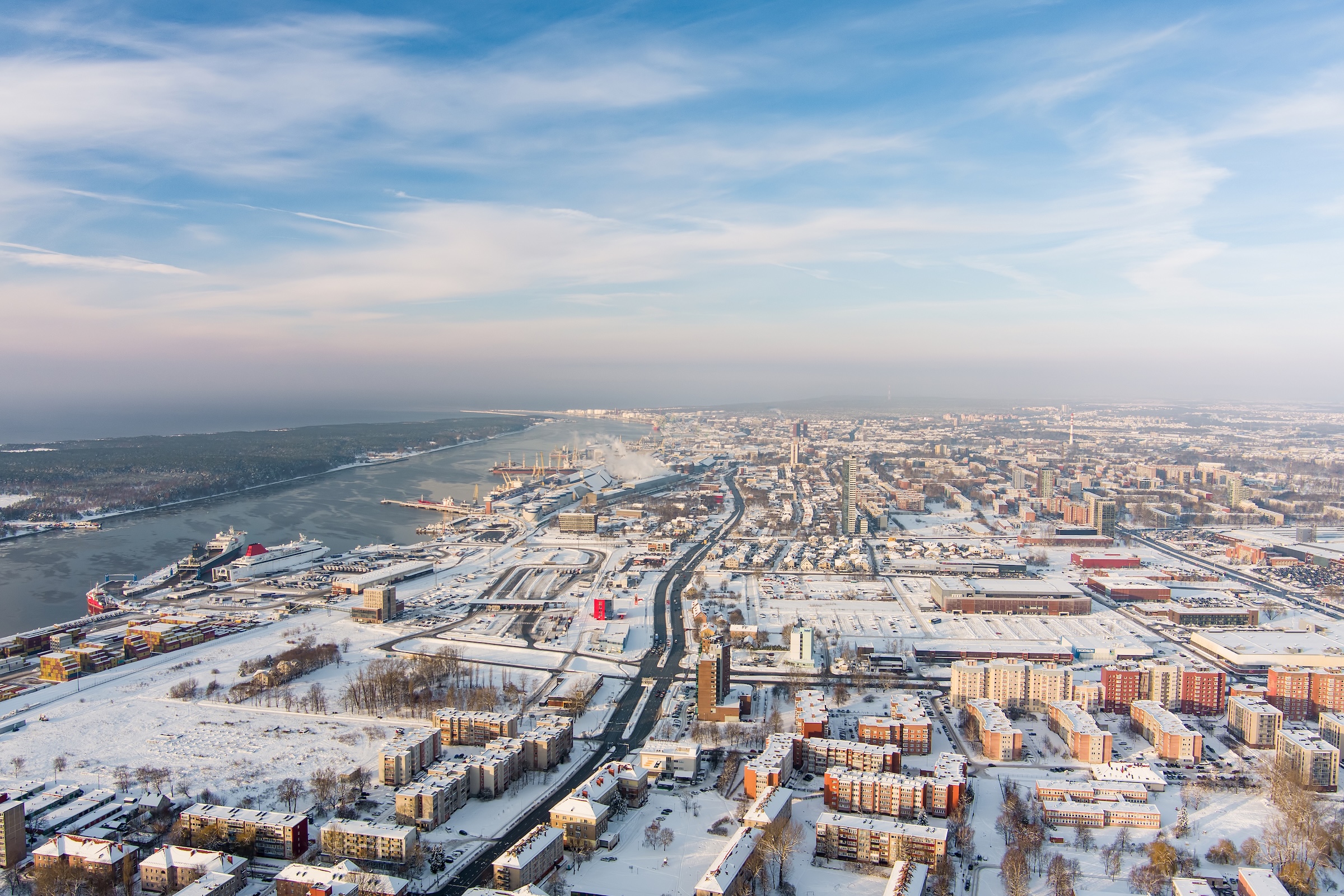
According to an analysis by real estate services company Ober-Haus, the Klaipėda real estate market stood out throughout Lithuania in 2025, with abundant construction, growing demand and a rapid increase in the number of transactions. Developers from other cities were also looking more and more boldly at the port city. After a long break, the commercial real estate sector also began to show potential in Klaipėda.
According to data from the Centre of Registers, a total of 3,369 homes (apartments and houses) were purchased in Klaipėda last year — 16.7% more than in 2024. The number of apartment transactions in the port city increased by 16.5% to reach 3,164. The housing market was much shallower, with only 205 units sold — however, this figure represented a 19.2% increase on 2024.
According to Ober-Haus calculations, the primary market in Klaipėda showed even more impressive growth, with developers selling over 580 apartments in the city last year — 65% more than in 2024.
According to the company’s data, the average price of apartments in Klaipėda reached €1,906 per square metre at the end of last year, which was 10.9% higher than a year ago. This annual rate of price change in Klaipėda slightly exceeded that in Vilnius (10.7%), but was more moderate than in Kaunas (13.8%).
Depending on factors such as the number of rooms and the district, the price of new apartments in the port city currently ranges from €2,000 to €3,800 per square metre, while older apartments cost between €1,000 and €3,700 per square metre. The highest prices are typically found in renovated buildings in the city centre, while in unrenovated apartment buildings, the price per square metre ranges from €1,000 to €2,400.
Breakthrough in residential construction
According to Aurimas Petrikas, head of Ober-Haus in the Klaipėda region, 2025 can be considered a breakthrough year for the port city. More and more new housing projects are being developed, as well as new stages on previously developed plots. The active market also meant that housing projects which had previously been difficult to initiate finally got underway last year. Despite rising prices, the number of transactions grew strongly, especially in the new housing segment.

“In Klaipėda, old, unfurnished housing remains the most in demand, often purchased at below-average prices for renovation, furnishing and resale. However, old housing is being overtaken by newly built apartments with partial finishing: these projects are performing very well and can already afford to consistently raise prices without slowing down the pace of sales,’ says A. Petrikas.
Active development of the primary market in Klaipėda is evident in new construction phases of projects such as Arimų Žiedas, Bastionų Namai, Pušyno Rezidencijos, Klaipėdos Holivudas, Memelio Miestas, Teatro Namai, Liepų Terasos, Danės Krantas, Parko Pakrantė and Dvaro Slėnis. In addition, developers have begun initial work on Jūros 1, Baltijos panorama, Miško jūra and City10 projects. New development has recently been concentrated in the city centre and the old town.
Another positive sign for the market is that developers from other cities are becoming increasingly bold in coming to Klaipėda. For instance, Eriadas has already achieved several successful sales in the port city’s new housing market. The fastest-growing neighbourhoods attracting buyers’ attention include Memelio miestas, Bastionų namai and Trinyčių rezidencija, as well as projects such as Dvaro slėnis, Danės krantas, Klaipėdos Holivudas, Liepų terasos and Saulės butai. “The growing supply in the primary market is shaping a new price level. A price of EUR 3,000 per square metre is no longer surprising in Klaipėda. With the number of transactions in the primary market growing, prices are likely to rise this year as well,” says A. Petrikas.
He believes that the requirement for a minimum down payment of 10% for a first home, which is set to be reduced in the second half of the year, will contribute to further market activity throughout Lithuania, including in Klaipėda. However, Petrikas points out that, at the same time, the conditions for purchasing a second home — for which Palanga and Šventoji are famous in the seaside region — are becoming stricter.
‘Recently, there has been increasing talk of some Lithuanian residents selling their second homes and investing in southern European countries. This trend is particularly noticeable in the Palanga property market, where many properties are second homes. While there is a slight sense of Lithuanian sentiment towards homes in southern European countries, it does not have a significant impact on the market and developers continue to build new properties on the coast. Therefore, changes in the financing of second homes are unlikely to have a significant effect on the Klaipėda region,” comments A. Petrikas.
In the rental segment, Ober-Haus has observed a clear shortage of supply in Klaipėda. According to A. Petrikas, the market there has become dependent on landlords. These landlords are able to find tenants quickly and easily by consistently raising rental prices. Over the past year, apartment rental prices have risen by about 4–5% and are now approaching €11/sq. m.
‘The apartment rental market dominates in Klaipėda, and there is practically no house rental category. Interestingly, there are enough university dormitories for students in the port city, so the rental market is driven by employees and other tenants. In Palanga, on the other hand, rentals are mainly seasonal and short-term, which does not accurately reflect long-term price trends,’ says the Ober-Haus representative.
Signs of revival in the commercial real estate market
After a decade of sluggish development, the company notes that the sector has begun to show positive signs in recent years. Real estate developers and investors in Vilnius and Kaunas have also begun to take notice. However, most of the activity so far has been further away from the Old Town.
The most visible commercial real estate trend in Klaipėda is commercial warehouses, known as ‘stock-offices’, which attracted interest and development somewhat later in the port city than in Vilnius or Kaunas. A few years ago, in the office segment, we saw lease deals being signed ‘on paper’ while construction was still underway. There was some excitement about foreign companies that might design or service a wind farm, but all that faded away last year. In the retail, catering and service premises segment, there is a clear ‘golden triangle’ between Akropolis, the arena and the swimming pool, where the largest number of residents gather, especially at weekends,’ comments A. Petrikas.
In his opinion, another prominent ‘triangle’ is emerging on Tilžės Street towards the Jakų roundabout, with storage, administrative, commercial and service facilities being developed initially. Large-scale commercial real estate transactions are also being implemented in the Klaipėda Free Economic Zone (FEZ) or in the ‘Industrial Logistics Park’ in the Klaipėda district, located in front of the free zone.
‘While the ice has certainly been broken in the Klaipėda commercial real estate market, and the coming decade looks optimistic, the old town remains a sore spot. Cafés and restaurants with significant footfall continue to close, and there are plenty of vacant premises for rent or sale.’ Businesses have effectively moved from the old town to other areas, which may put further pressure on car-related infrastructure. For example, premises anywhere in the city are currently only rented on the condition that vehicles can be parked on site,” explains A. Petrikas.

Construction is beginning on a new housing project called Antakalnio kalvos in the Antakalnis district of Vilnius, on Barsukynės Street. This gated community will comprise 48 cottages. The project will feature 105 sq. m., four-room, A++ energy class homes, which buyers will be able to purchase with partial or full finishing. Each home will also have a landscaped plot of land with a terrace and parking spaces next to the house.
The neighbourhood will have an enclosed, landscaped area, as well as community spaces for active, quality leisure time, including internal walking paths, a basketball court, paddle tennis courts, an outdoor exercise area and children’s play areas.
“The new neighbourhood is being built in an exceptional location in the capital: Lake Pupojai and the Pupojai Forest are nearby, and the Dvarčionys Geomorphological Reserve exudes tranquility and greenery. And all this is just a 10-minute drive from Vilnius Old Town. It is an ideal place for those seeking harmony with nature but wanting to live close to the city centre,” says Nika Bijeikytė, the project’s sales manager.
In view of the growing demand for ready-to-move-in homes on the market, the project also offers fully finished cottages. “Buyers can choose from four different interior styles and move into fully furnished homes,” says N. Bijeikytė.
The project emphasises privacy and sustainable solutions. The cottages are designed with double walls to ensure excellent sound insulation and maximum privacy for residents. The houses are staggered so that the gardens are not in a single line. High-quality, durable materials are used in construction, including a clinker brick façade, Kommerling windows and a Danfoss heating system. Each house is also prepared for the installation of a solar power plant, enabling residents to reduce their energy costs and embrace a more sustainable lifestyle.
The Antakalnio Kalvos project is being implemented by UAB JORE Group, with the Ober-Haus team handling sales and marketing.
For more information, visit www.antakalniokalvos.lt.


The Ober-Haus Lithuanian apartment price index (OHBI), which follows changes in apartment sale prices in the five biggest Lithuanian cities (Vilnius, Kaunas, Klaipėda, Šiauliai and Panevėžys) increased by 1.1% in December 2025. The annual apartment price growth in the biggest cities of Lithuania was 11,3 %. The average annual growth in apartment prices in 2025 (January–December 2025 compared to January–December 2024) reached 7.3%.
In December 2025 apartment prices in Vilnius, Kaunas, Klaipėda, Šiauliai and Panevėžys increased by 1.0%, 1.2%, 1.0%, 1.4% and 0.9%, respectively, with the average price per square meter reaching EUR 2,930 (+30 EUR/sqm), EUR 2,071 (+24 EUR/sqm), EUR 1,906 (+19 EUR/sqm), EUR 1,273 (+18 EUR/sqm) and EUR 1,236 (+12 EUR/sqm).
In the past 12 months, the prices of apartments increased in all the biggest cities in the country: 10.7 % in Vilnius, 13.8% in Kaunas, 10.9% in Klaipėda, 11.0% in Šiauliai and 10.0% in Panevėžys.
‘In 2025, we witnessed a particularly rapid recovery across the entire housing market. According to data from the State Enterprise Centre of Registers, a total of just over 50,000 homes (including apartments and houses) were purchased across the country during the year. This represented an increase of 21% on the number purchased in 2024 (an increase of 23% for apartments and 18% for houses). The return of buyers to the housing market also stimulated house prices. While the annual growth in apartment prices in the country’s major cities was initially 4.0%, this steadily increased over the year, reaching 11.3% by the end of 2025. This was the highest annual growth in apartment prices since mid-2023.
While the average annual growth in apartment prices in the country’s major cities was one of the lowest in the last decade at 2.9% in 2024, it reached 7.3% in 2025. In 2025, it is evident that apartment prices grew twice as fast as other consumer goods and services in the country. According to data from the State Data Agency, the average annual inflation (HICP) in 2025 was 3.4%. However, despite the fairly rapid rise in housing prices, wage growth is supporting buyers’ ability to purchase homes. According to forecasts, wages in the country are expected to grow by an average of 8.5% in 2025, which is slightly faster than the increase in apartment prices.
Currently, it is expected that the housing market will remain extremely active in 2026. The excellent housing market indicators for 2025, the use of funds withdrawn from the second pension pillar to purchase housing and the upcoming amendments to the Responsible Lending Regulations are all factors that are shaping high expectations among market participants that the housing market will continue to grow. While these factors may have a positive impact on the housing market, this does not necessarily mean that we will see the same rapid price growth as last year. A slowdown in wage growth and the end of the cycle of interest rate cuts could limit the ability of many buyers to purchase their desired homes. Therefore, even if the housing market remains as active as it is now, home sellers’ overly optimistic expectations may not be met. It is quite realistic to expect a slowdown rather than an increase in housing price growth in 2026,’ said Raimondas Reginis, research manager for the Baltics at Ober-Haus.
Full review (PDF): Lithuanian Apartment Price Index, December 2025

Following a challenging period from 2022 to 2024, the Lithuanian housing market experienced one of its fastest recovery periods in 2025, both historically and compared with other European countries. Even without the results for December, it is clear that activity in the housing market will be around a fifth higher this year than in 2024. A total of over 50,000 apartments and houses are expected to be purchased in Lithuania this year, marking the third time in the country’s history that annual sales have surpassed this threshold. According to the Ober-Haus review, previously such high sales volumes were only achieved in 2005 and 2021.
‘It is safe to say that the housing market’s recovery this year is comprehensive. Firstly, almost all municipalities in the country are recording higher housing sales than in 2024. There has also been a significant increase in activity across the country in both the house and apartment segments, as well as in the primary and secondary markets,’ said Raimondas Reginis, research manager for the Baltics at Ober-Haus.
According to R. Reginis, the rapid recovery of the housing market was driven by positive changes in the finance sector, with the average mortgage interest rate falling by over 2 percentage points in the last two years, returning to levels last seen in September 2022. The scale of buyers returning to the loan market is evident in the volume of new loans issued, which is expected to be 55-60% higher than a year ago. A record number of new housing loans are also expected to be issued, totalling around €3.3-3.4 billion.
Clearly, the abundant cash flow into the housing market has enabled sellers to increase their asking prices. While the average annual growth in apartment sales prices in the country’s major cities was one of the lowest in the last decade at 2.9% in 2024, Ober-Haus estimates that growth will reach 7.0–7.5% in 2025. The average wage is forecast to grow by around 8.5% this year, meaning that nominal household income will grow only slightly faster than housing prices.
It should also be noted that inflation in Lithuania remains higher than in the Eurozone, significantly reducing the population’s purchasing power. Therefore, it is not surprising that, in a context of rapidly rising residential property prices, residents are particularly active in purchasing older homes, which are attractive due to their lower prices. For instance, in the capital city, where housing prices are the highest among major cities in the country, sales of older apartments reached an all-time high in 2025. Meanwhile, sales of new apartments in the capital’s primary market remain a sixth lower than in the record year of 2021,’ says R. Reginis.
Seeing the housing market recover, it is important that developers have been trying to increase the pace of apartment construction by offering new projects to the market. However, given the current level of housing demand and the rapidly declining number of completed and unsold apartments, development volumes in the country’s major cities could be higher. This is particularly relevant for homebuyers in Kaunas, where fewer apartments will be built for sale in 2025 than in 2024. Therefore, it is not surprising that the increase in apartment sales prices in this city will be the fastest among all major cities in the country this year, with average annual growth reaching 8.0–9.0%.
Although there will be no shortage of buyers in the housing market in 2026, they will remain sensitive to both price and the geopolitical environment
The 2025 housing market indicators have clearly shaped market participants’ optimistic expectations, with developers striving to build as much as possible and sellers aiming to achieve the highest possible prices. Given these sentiments and the country’s positive economic outlook, there is every chance that the housing market will reach new heights in 2026.
Several regulatory changes coming into force next year will be important for the housing market. ‘The most significant of these is probably the change to the second-tier pension accumulation system, whereby, from the beginning of 2026, residents will be given the opportunity to withdraw their accumulated funds,’ says R. Reginis.
According to calculations by the Bank of Lithuania, residents could withdraw around €1.1 billion in accumulated funds during the first half of 2026 (the first wave of withdrawals from the pension accumulation system). Various surveys suggest that up to 20% of these funds could be invested in residential real estate.
‘However, it should be understood that not all of these funds would be used for the direct purchase of housing, but also for renovating or constructing existing properties. In other words, part of these funds would go to the retail and construction sectors,’ notes R. Reginis.
For example, a survey by Hubel, a research and marketing consultancy, found that 9% of respondents plan to use money withdrawn specifically for housing purchases. If one-tenth of the funds withdrawn from the second pension pillar were to be allocated directly to housing purchases, an additional €100 million could be injected into the country’s housing market by the first half of 2026. Is this a significant amount for the country’s housing market? A total of over €4 billion is expected to be spent on housing purchases in Lithuania in 2025, meaning the additional €100 million could increase the country’s housing market turnover by 5%. Although this relative increase does not seem very large, it would still stimulate the rapidly recovering housing market. However, it is likely that, by the second half of 2026 and 2027, this additional money from pension funds will no longer be as significant.
Also, from August 2026, changes to responsible lending rules will come into effect, reducing the required deposit for first-time buyers from 15% to 10%. It is difficult to estimate the proportion of potential homebuyers who could benefit from these changes. Firstly, borrowers must meet certain requirements, and secondly, lending institutions will assess each buyer’s creditworthiness individually and determine the size of the down payment themselves (not necessarily the minimum allowed). Nevertheless, it is evident that some prospective buyers will be able to seize the opportunity to purchase a home with the minimum down payment permitted, thereby contributing to the expansion of the housing market during the second half of 2026.
According to R. Reginis, if sufficient factors indeed stimulate the housing market next year, the biggest challenge will be the rise in residential property prices. ‘After a fairly rapid increase in housing prices this year, we should expect a more moderate, yet still significant, rise in prices in 2026. In a market with growth potential, it would be naive to expect stable sales prices, but an overly rapid increase is also unlikely,’ says the expert.
Firstly, the factor of falling interest rates, which recently drove the market recovery, is no longer present. The ECB is signalling that the cycle of interest rate cuts is over, and that rates should stabilise in 2026. Average interest rates on new housing loans in Lithuania also suggest they will remain stable at around 3.6% from mid-2025 onwards. Therefore, housing affordability next year will largely depend on growth in household income. Economists predict that wage growth will steadily slow down, with average wage growth not exceeding 8% by 2026. Meanwhile, average annual inflation in the country will be similar to that in 2025, exceeding 3%. ‘Therefore, it is likely that, in 2026, apartment prices in the country’s major cities will grow at a similar rate to that of real household income, with average annual growth reaching around 4–6%. A more rapid rise in housing prices would limit some people’s ability to purchase their desired property, forcing them to choose smaller or lower-quality housing, or even postpone their purchase plans and remain in the rental market,’ predicts R. Reginis.
A sufficient supply of new housing is crucial for maintaining a balanced residential property market. In a healthy, competitive environment, buyers can expect a diverse and ample choice of housing, as well as slower growth in housing prices. However, when the supply of new housing is too low and prices for such housing rise more rapidly, buyers look for cheaper, more affordable options on the secondary market. This contributes to faster price increases in this segment as well. These are precisely the trends that have been observed this year. Therefore, in order to exploit the market’s potential and help prevent housing prices from rising too rapidly, developers will have to regularly offer new projects to the market, especially in Kaunas and Vilnius, in 2026 and beyond.
However, the greatest source of uncertainty remains the tense geopolitical situation, which directly impacts our country’s economic structure, including trade flows, energy resource prices, immigration and foreign investment. Despite these challenges, the 2025 housing market indicators show that Lithuanian residents remain largely resilient and continue to invest in housing in their country. In recent years, there has also been a growing flow of Lithuanian investment, both business and residential, into the real estate markets of Central and Southern Europe. “Therefore, the greatest threat in 2026 remains a possible escalation of the geopolitical situation, which could dampen local consumption and the desire to purchase housing in Lithuania,” says R. Reginis.