




In 2025 developers built only half as much as buyers purchased


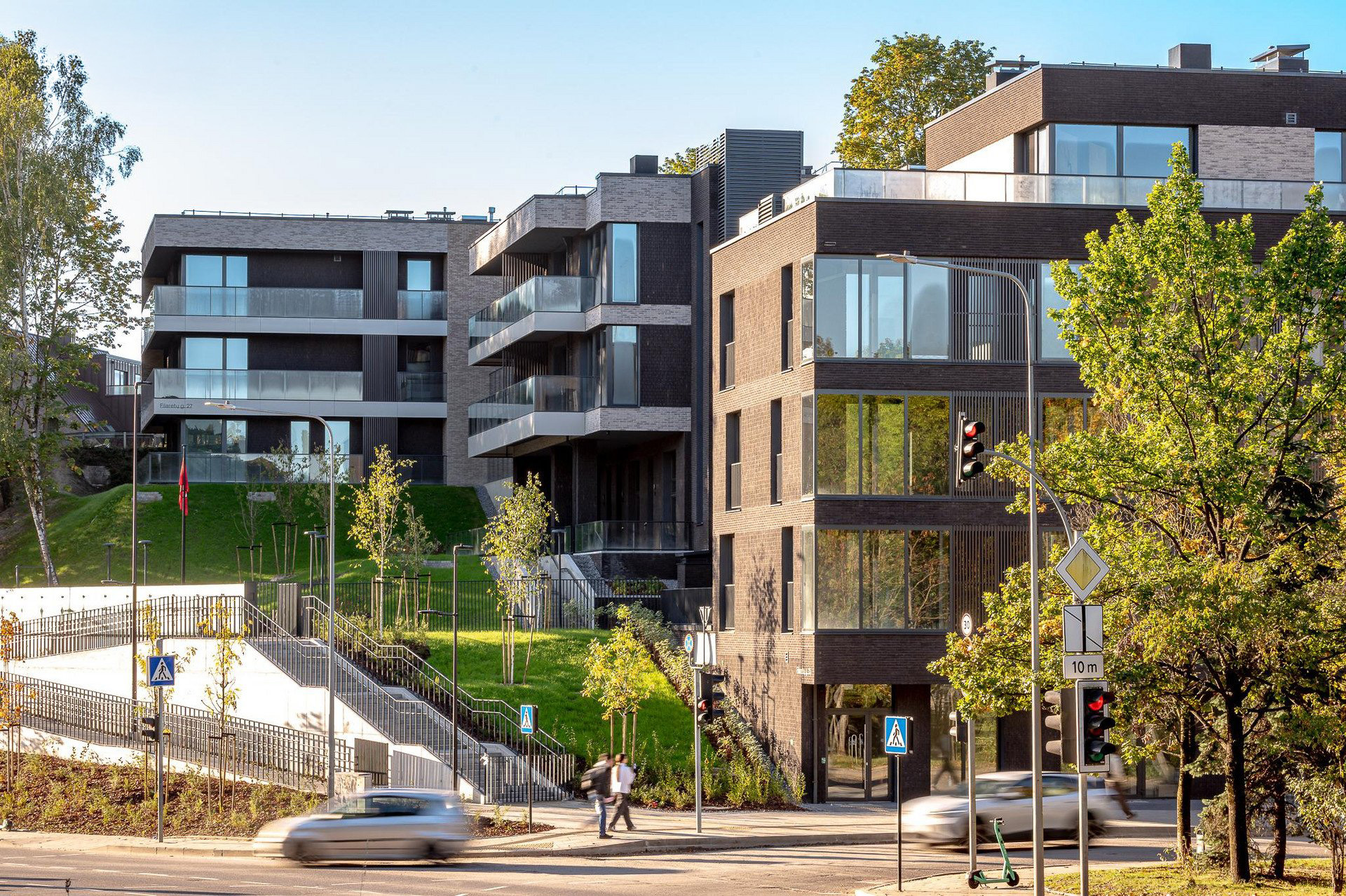
In 2025, the Lithuanian housing market was characterised by a particularly rapid increase in housing sales volumes in both the secondary and primary markets. According to the Ober-Haus review, a particularly rapid recovery was recorded in the primary market of large cities, where buyers were active in purchasing newly built apartments in completed and newly constructed buildings. Of all the apartments actually built and sold on the primary market, the capital city showed the greatest imbalance in 2025.
According to Ober-Haus data, developers in Vilnius built 2,787 apartments for sale in apartment buildings in 2025, which was 8% more than in 2024. Meanwhile, over 5,700 apartments were sold on the primary market in Vilnius during the year, representing an increase of 82%.
‘This means that developers actually built half as much as the recorded housing demand. Since the project planning and construction process is lengthy and often takes longer than planned, the rapid recovery of the market has left developers unable to meet demand,” says Raimondas Reginis, Ober-Haus’s market research manager for the Baltic countries. This situation is unfavourable for both buyers and developers. Buyers have limited choice and face rapidly rising prices, while developers are unable to fully exploit the market’s potential.
The most intensive development is taking place in residential areas, with apartment sizes remaining stable
In 2025, developers built new apartments in 16 districts of Vilnius. Five city districts attracted the most attention from developers, accounting for more than half of all new apartments: Verkių sen. (19.5%), Žirmūnų sen. (9.7%), Pašilaičių sen. (9.4%), Justiniškės (9.1%), and Naujininkai (8.0%).
R. Reginis points out that, in the city centre, where opportunities for developing new projects are limited and complex, implementation takes significantly longer than for typical apartment buildings in other parts of the city. ‘Therefore, the number of newly built apartments here is not large, and buyers are forced to wait more than a year for construction to be completed,’ says the expert. For instance, apartments built in the Naujamiesčio and Senamiesčio districts accounted for just 10% in 2025 (16% in 2024). In recent years, there has been more active investment in the southern part of Naujamiesčio and Senamiesčio as there are still quite a few old buildings and areas suitable for conversion. Projects such as Stepono sodas, Naujamiesčio trio, Off!, Naujamiesčio vingis, Algirdo alėja, Senamiesčio sodai, Vilniaus Džiazas and Sanguškų parkas are already being implemented in this part of the city.
Meanwhile, the average size of apartments built for sale has remained stable over the past three years, hovering around 50 square metres. According to Ober-Haus data, the average apartment size in multi-family buildings constructed in Vilnius in 2025 was 50.1 square metres, which is slightly larger than the lowest figure of 49.5 square metres recorded in 2024.
‘Buyers looking for more spacious and affordable housing often look for alternatives on the outskirts of cities. The large number of detached and semi-detached houses being built near large cities indicates the demand for such housing — people are buying plots of land and building their own houses, purchasing them on the secondary market or looking for them in newly developed residential areas,’ says R. Reginis. According to data from the State Data Agency, the usable floor space of houses built in Lithuania over the past 10 years is more than three times greater than that of apartments in multi-family buildings.
Apartments in A++ energy class buildings are becoming the norm
Data collected by Ober-Haus shows that, in 2025, apartments in A++ energy class buildings accounted for 71.5% of those built for sale in the capital (compared to 40.5% in 2024). Although the requirement for new buildings to meet A++ energy efficiency standards came into force on 1 January 2021, we can see that apartment buildings with this energy rating only began to dominate four years later.
Apartments in A+ energy class buildings accounted for 17.9% in 2025 (compared to 22.4% in 2024), while those in A class buildings accounted for just 5.4% (compared to 30.6% in 2024). The remaining apartments (5.2%) were in buildings with a B energy class or lower.
Up to a quarter fewer apartments have been built in Kaunas and Klaipėda
The number of apartments built in Kaunas has declined for two consecutive years. According to Ober-Haus data, developers in Kaunas built 659 apartments for sale in multi-family buildings in 2025, which is 21% fewer than in 2024 and 2.3 times fewer than in 2023, when construction volumes were at their highest.
R. Reginis attributes the sudden decline in housing sales in 2022–2023 to dampening developers’ enthusiasm and limiting their ability to start new housing projects, resulting in fewer apartments being built in 2024–2025. Meanwhile, demand for housing has grown rapidly in recent years. For example, over 1,200 apartments were sold in the primary apartment market in Kaunas in 2025. This means that demand for new apartments in the city was almost double the number actually built.
Similar trends were observed in Klaipėda in 2025, where developers built 364 apartments for sale in multi-family buildings, which was 24% less than in 2024. As in other major cities in the country, the number of apartments built was insufficient to meet demand for new housing; developers agreed to sell more than 580 new apartments in the port city in 2025.
The results of increased investment in apartment development will be visible by 2026
Following the particularly rapid recovery of the housing market in 2025, developers rushed to invest in new construction projects. Consequently, in 2026, a much larger number of apartments will be built for sale in the country’s major cities. Ober-Haus estimates that up to 4,500 apartments will be built for sale in Vilnius in 2026, which is 60% more than in 2025. In Kaunas, developers plan to build around 950 apartments, 45% more than in 2025.
Meanwhile, up to 600 apartments are expected to be built for sale in Klaipėda in 2026, which would represent the highest number of apartments built in the city since 2009. R. Reginis notes that the biggest changes in the port city in recent years have been seen in the city centre – specifically the Old Town area – where developers have begun investing in larger, higher-class projects.
The first stage of Memelio Miestas is currently being completed, as is the Teatro Namai apartment building on Žvejų Street. Construction of the Bastionų Namai project is ongoing, and the Trinyčių Rezidencijos project has begun on a 5-hectare site. The former Klaipėda court and prison complex on Jūros Street is also being renovated to offer a variety of commercial and residential premises.
‘The projects being developed in the most valuable part of the city will finally offer buyers a much wider range of housing options. Such projects will significantly increase the upper limit of apartment prices in Klaipėda, which were previously much lower than in Vilnius or Kaunas due to the extremely limited supply of high-end housing,’ says R. Reginis.
However, the increase in the volume of apartment construction in the country’s major cities does not mean that enough housing is being built. R. Reginis comments that the current level of demand for new housing indicates that too little is being built at present. The greatest imbalance between supply and demand remains in Vilnius and Kaunas. This is illustrated by the proportion of housing sold in these cities. For instance, around 55% of the apartments planned for construction in Klaipėda in 2026 have already been sold or reserved, compared to 70% in Kaunas and Vilnius. Therefore, it is crucial that developers actively start new projects in 2026 to avoid a housing shortage for buyers in 2027–2028. ‘To achieve a healthy balance between supply and demand, more than 5,000 new apartments should be built in the capital each year,’ calculates R. Reginis. This is particularly relevant if the housing market remains as active as it was in early 2026.
Latest news
 All news
In 2025 developers built only half as much as buyers purchased
In 2025, the Lithuanian housing market was characterised by a particularly rapid increase in housing sales volumes in both the secondary and primary markets. According to the Ober-Haus review, a particularly rapid recovery was recorded in the primary market of large cities, where buyers were active in purchasing newly built apartments in completed and newly constructed buildings. Of all the apartments actually built and sold on the primary market, the capital city showed the greatest imbalance in 2025. According to Ober-Haus data, developers in Vilnius built 2,787 apartments for sale in apartment buildings in 2025, which was 8% more than in 2024. Meanwhile, over 5,700 apartments were sold on the primary market in Vilnius during the year, representing an increase of 82%. 'This means that developers actually built half as much as the recorded housing demand. Since the project planning and construction process is lengthy and often takes longer than planned, the rapid recovery of the market has left developers unable to meet demand," says Raimondas Reginis, Ober-Haus's market research manager for the Baltic countries. This situation is unfavourable for both buyers and developers. Buyers have limited choice and face rapidly rising prices, while developers are unable to fully exploit…
Sales of Dubysa Namai apartments in Ariogala have begun
The Dubysos Namai housing project in Ariogala is nearing completion. This five-storey residential building has been developed on a 0.75-hectare plot of land in the picturesque Dubysa Valley. This development will provide much-needed new housing for the town's real estate market, where supply has been extremely limited until now. Sales of the apartments have already begun, and prospective buyers can choose from a range of modern, well-designed homes. First-time homebuyer subsidies are available for young families. The development comprises 89 apartments, each with a storage room and parking space. The development will feature a children's playground, leisure areas, lighting and a gated entrance, creating a safe and comfortable environment for residents. Dubysos Namai offers two to four-room apartments ranging from 55 to 110 m² in size with partial finishing. The first phase of apartments has been completed and is ready for new residents to move in, while the second phase of construction is expected to be finished in Q4 of 2026. Almost all apartments have balconies and the option to install a fireplace, offering panoramic views of the Dubysa Valley. Many buyers are surprised that it is possible to install a fireplace in Dubysos Namai apartments. This is a rare…

The Šiauliai housing market is expected to see a more moderate second half of the year
Although housing prices in Šiauliai rose by 11% in 2025 and remained active at the beginning of this year, the market is expected to stabilise in summer or autumn, according to forecasts by Ober-Haus. According to data from the Centre of Registers, a total of 1,539 apartments and 253 houses were purchased in Šiauliai in 2025, representing increases of 22.9% and 22.4%, respectively, compared to 2024. According to Ober-Haus calculations, the average price of apartments in Šiauliai was €1,273 per square metre at the end of last year, which is 11% higher than a year ago. According to the company's data, the price of typical old apartments in residential areas of Šiauliai currently ranges from €1,200 to €1,800 per square metre, depending on furnishings, location and the condition of the building. Prices for newly built apartments with partial finishing in residential areas range from €2,000 to €2,800 per square metre, whereas in the city centre or the old town, prices per square metre can reach €2,500 to €3,200. Linas Juozaitis, head of the Šiauliai Ober-Haus office, comments that the highest market activity and price growth in the city was observed in the second half of last year, and similar trends…
All news